



The provided sources discuss the complex and often contradictory impacts of digital technology across financial markets, governance, and democratic society. Several articles focus on asset tokenization and central bank digital currencies (CBDCs), noting their potential for operational efficiency and greater market access through programmable ledgers, but also warning of risks like fragmentation, flash crashes, lack of interoperability, and threats to financial privacy. Other sources examine the role of technology in democracy, detailing pervasive concerns over surveillance capitalism, online manipulation, and the ability of centralized tech platforms to erode democratic institutions and citizen autonomy. Finally, a significant portion of the text explores radical, techno-libertarian proposals, such as the “Network State” and the neoreactionary movement (NRx), which envision new forms of governance grounded in blockchain technology or authoritarian models that oppose liberal democracy and seek to move power and property rights away from nation-states.

Download the Sources & Full PDF Deep Dive

Also Recommended

I also used the topics / bulletpoints from this post & interview and asked Grok to provide me with sources on this topic. I also used a few videos from Hidden AmuraKa
View my Notes Archive: https://docs.urbanodyssey.xyz/biodigital-convergence/
the pivotal importance of digital ID to the technocrats’ plans;
the cunning implementation of a “unified ledger” as the backbone of a centralised, interoperable global financial system;
tokenization, natural “assets,” and the “solution” to the global debt problem;
methods of deceiving the public about what is going on;
network states;
the “Dark Enlightenment” and the crazy neoreactionary thinking that Thiel, Musk, and others appear to endorse; and
possibilities for resistance.

Videos from Hidden AmuraKa
TOKENIZATION AND THE ARCHITECTURE OF FINANCIAL SOVEREIGNTY
The convergence of Digital Transformation and governance involves the engineered replacement of fragmented financial systems with an integrated, programmable architecture of control, founded upon tokenization and finalized by the unified ledger. This restructuring shifts power from distributed intermediaries toward centralized, state-sanctioned monopolies capable of enforcing total financial surveillance and converting nature itself into a highly controlled asset class.
THE OBSOLESCENCE OF TRADITIONAL SYSTEMS AND THE IMPERATIVE FOR THE UNIFIED LEDGER
The transition toward tokenized digital finance is justified by the inherent inefficiencies and security deficits embedded in traditional settlement systems, setting the stage for a radical centralization of data and control.
Traditional digital transactions rely on chains of intermediaries (banks, credit card networks) that only seem instantaneous, necessitating later approval and settlement, which incurs significant delays and costs, particularly in securities markets,. The operational necessity of managing settlement risk through these middlemen results in delays that can be costly when trading securities. Yet, the complex financial surveillance systems built upon this flawed architecture, such as the existing Anti-Money Laundering (AML) and Know-Your-Customer (KYC) regimes, are profoundly ineffective. Global authorities estimate that substantially less than one percent of illicit finance is ever intercepted, despite financial firms spending hundreds of billions globally each year on compliance. This costly failure requires individuals to surrender vast troves of personal data, creating massive honeypots vulnerable to identity theft and fraud,,.
The response is to cut these mediation costs by transferring the immediacy of physical token exchange into the digital domain. This drive for efficiency and efficacy demands a single, immutable source of truth, establishing the unified ledger as the inevitable successor.
TOKENIZATION: THE MECHANISM OF PROGRAMMABLE CONTROL
Tokenization acts as the core technological mechanism, digitally representing assets on a programmable ledger, creating a shared and trusted recordkeeping system,,. The fundamental disruption lies in its ability to seamlessly integrate messaging, reconciliation, and asset transfer into a single operation,.
Programmability and Atomic Settlement: The key feature unlocked by tokenization is programmability via smart contracts,. This capability allows predefined conditions, logic, and rules to be encoded directly into the asset or transaction,. This results in atomic settlement, ensuring the buyer’s money and the seller’s asset are locked in and exchanged at the exact same moment. Assets become “executable objects” transferable through programming instructions residing on the ledger.
Evolving Intermediation: While tokenization reduces the necessity for certain traditional roles, such as registrars, by automating payments directly to token holders, it does not eliminate intermediaries entirely. Instead, it reshapes the industry by introducing new forms of digital oversight and governance,. For tokenization to realize its benefits, it requires careful planning and coordination to ensure interoperability; otherwise, the financial system risks fragmenting into unmanageable silos.
The Risk of Financial Instability: This pursuit of maximum efficiency carries existential risk. The resultant “faster, automated trading” heightens market volatility, making flash crashes (such as the 2010 Wall Street crash) more likely,. Furthermore, the complexity inherent in tokenization allows “chains of programs” to be written atop each other, setting up a “programmed set of falling dominoes” that could amplify a financial crisis far beyond the scale of the 2008–09 complexity bubble,.
THE UNIFIED LEDGER: ARCHITECTURE OF TOTAL SOVEREIGNTY
The ultimate expression of controlled financial integration is the BIS-championed unified ledger, a financial market infrastructure designed to bring together money and claims into one single, universally visible venue.
The blueprint centers on hosting the “trilogy” of tokenized central bank reserves, tokenized commercial bank money, and tokenized government bonds on this unified ledger,,,. This structure ensures that Central Bank Digital Currency (CBDC) reserves act as the definitive, trustworthy asset for final settlement, preserving the “singleness of money” while leveraging tokenization’s functionality,.
The Fusion of Digital Identity and Programmable Coercion
The shift to this unified system risks transforming economic participation from an inherent right into a conditional, digitally enforced privilege. CBDCs are digital national currencies that are a direct liability of the central bank. Unlike current digital payments, transactions involving a CBDC would be centralized and processed by the government.
Financial Panopticon: The CBDC framework fundamentally threatens financial privacy by centralizing transaction data in the hands of the government. CBDCs are inherently traceable,, unlike physical cash. This pervasive surveillance infrastructure, once built, tends to expand in scope and permanence, even in functional democracies,.
Programmable Exclusion: When tied to identity (as seen in examples like Thailand’s quasi-CBDC wallet), authorities gain the ability to impose profound restrictions: limiting payments to only government-approved goods, confining spending geographically based on ID card district, or restricting usage to only “worthy individuals”,. This programmability provides the tools to “restrict financial freedom in countless ways”, including potentially imposing expiry dates on money or blocking access for disfavored groups,. This reduces rights to conditional privileges contingent on algorithmic compliance.
The Mandate of Conversion: International evidence shows CBDC adoption often involves coercive methods. Nigeria attempted to spur adoption by causing a cash shortage, and Bahamian commercial banks are being forced to distribute the national CBDC,. Officials in numerous countries have stated their intention to use CBDCs as a mechanism to achieve a fully cashless society.
THE TOTAL COMMODIFICATION OF EXISTENCE
The hyper-efficiency enabled by tokenization is not confined merely to traditional equities; it extends the logic of quantifiable value to all physical existence, creating new massive asset classes ready for capture within the unified ledger architecture.
Hard Asset Digitization: Tokenization is expanding to include non-financial assets such as real estate. The global market for commercial real estate tokenization is projected to dramatically expand to $4 trillion by 2035,. This process provides enhanced liquidity, traceability, and fractional ownership of traditionally illiquid hard assets,,.
The Conversion of Nature into Capital: The most profound act of commodification is the tokenization of natural components, framed as “nature-based assets.” This converts ecosystems, biodiversity, and carbon sequestration capacity into digital tokens tradable on a programmable ledger. The stated premise is correcting the economic invisibility of nature’s services by assigning them market value to incentivize conservation.
The Atrophy Scenario: Viewing nature purely through an instrumental economic valuation framework risks destroying its intrinsic, spiritual, and cultural worth,, reducing complex ecological systems to manipulable metrics. This leads to the “atrophy scenario,” where the focus on market efficiency prioritizes short-term economic gains over long-term sustainability. Inequitable implementation facilitates “biopiracy 2.0,” concentrating power and wealth over natural resources in the hands of a few transnational elites, leaving local communities disenfranchised. The integrity of such assets is also constantly threatened by greenwashing and speculative bubbles,.
Tokenization and the deployment of the unified ledger construct a seamless, inescapable framework designed for ultimate control, making verifiable compliance the cost of economic survival, and coding the very planet into its final, monetized ledger entry.
The Dark Enlightenment Manifesto: Architecting the Techno-Monarchy
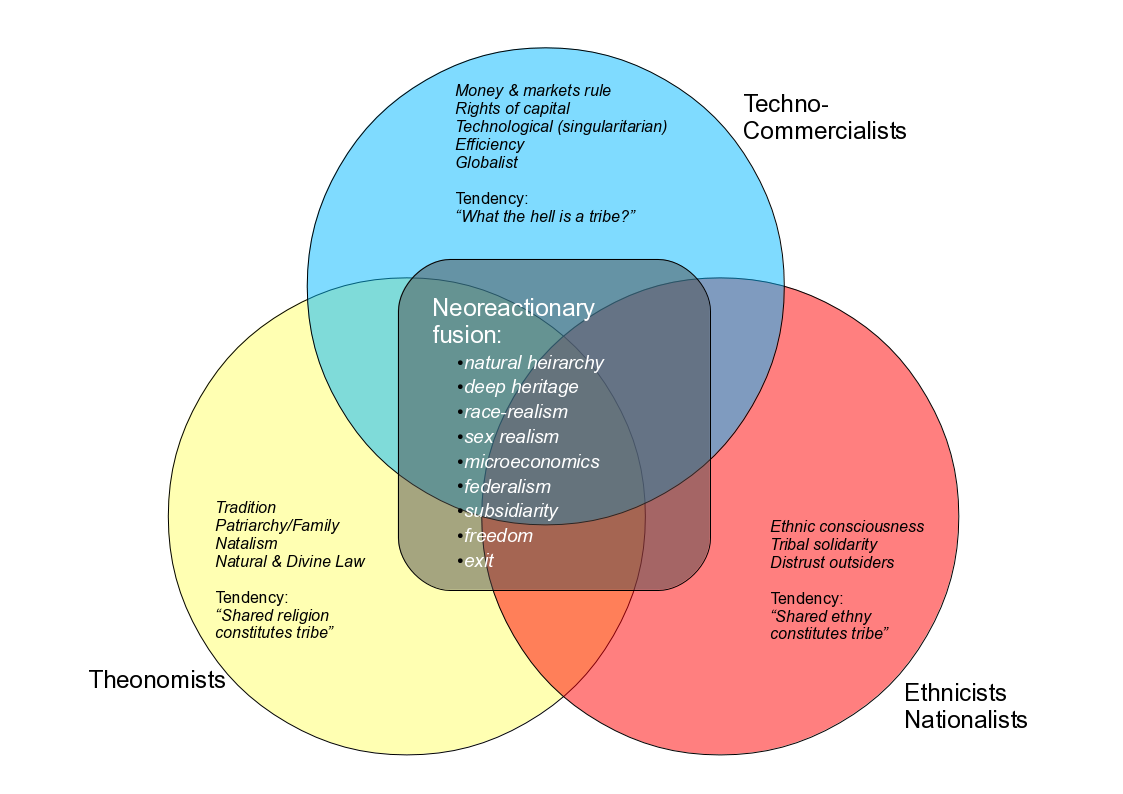
The Dark Enlightenment (alternately known as the Neo-Reactionary movement, or NRx) is an esoteric, anti-democratic philosophical movement that has quietly infected the highest echelons of the U.S. technology and political elite, providing an ideological foundation for the systemic dismantling of existing liberal structures. It seeks to replace democratic representation with hierarchical, authoritarian systems grounded in the cold calculus of technological efficiency.
THE CORE DOCTRINE: Rejection of Democracy & “The Cathedral”
NRx thinkers perceive liberal democracy not as a viable system of governance but as a broken machine structurally incapable of delivering competence or clarity. This fatal flaw necessitates a total architectural rewrite of civilization.
The Flaw of Equality and the CEO-Monarch
The core NRx belief is that democracy itself creates social erosion and stifles progress, particularly due to its reliance on unaccountable managerial classes.
Rejection of Liberal Values: NRx intellectuals, primarily Curtis Yarvin and Nick Land, fundamentally reject core Enlightenment principles such as equality, universal liberty, and democracy itself.
The Corporate State: The movement advocates replacing the messy inefficiency of political processes with systems run as for-profit entities, or “GovCorps,” led by an absolute CEO-Monarch. This sovereign executive would be granted complete authority with total accountability for results.
Efficiency Over Humanism: This doctrine is profoundly anti-egalitarian and anti-humanist, viewing democratic constraints—such as political deliberation or the protection of equal rights—as mere “friction” or “inefficiency” that must be optimized away to achieve maximum technological acceleration and power. Peter Thiel explicitly affirmed this core conclusion, stating, “I no longer believe that freedom and democracy are compatible”.
The Priesthood of the Cathedral
Yarvin coined the term “the Cathedral” to define the decentralized, intellectual oligarchy NRx believes truly controls Western society.
Composition and Control: The Cathedral is a self-organizing consensus network composed of powerful ideological institutions, including academia, the media, non-profits, and the civil service.
Narrative Warfare: This network functions as a “priesthood,” manufacturing consensus, shaping public morality, and dictating the boundaries of acceptable thought to enforce a “progressive orthodoxy”. It rules not through force, but through narrative control.
The End Goal: The core political strategy (RAGE—Retire All Government Employees) mandates violently shattering the Cathedral’s legitimacy and physically purging its bureaucratic components (the civil service) to install unchecked executive authority.
THE TECHNOLOGICAL IMPERATIVE: Accelerationism, AI & the Architects
The NRx vision is inextricably tied to technological acceleration, leveraging advanced systems like AI and blockchain not merely as tools, but as agents of systemic change.
Accelerationism and the Machine God
Nick Land provides the metaphysical imperative for the movement, conceptualizing capitalism as a synthetic, autonomous entity driving towards a singularity.
Capitalism as AI: Land views capitalism not as an economic system managed by humans, but as an “autonomous alien intelligence” that emerged through human society and operates on its own inhuman logic. This entity uses humanity as temporary biological hardware.
The Singularity: Technological acceleration is the drive toward the singularity, an irreversible transformation where machine processes supersede human agency. AI is viewed as the “final form of capitalism”.
The CEO-Monarch as Instrument: The replacement of democracy with a CEO-Monarch is the political realization of accelerationism: a mechanism to eliminate democracy’s sentimental regard for human equality (friction) to achieve maximal efficiency and speed.
Thiel, Musk, and the Political Weaponization of Efficiency
The NRx philosophical framework has found influential patrons and political executors in the Silicon Valley ecosystem, specifically aligning with figures noted for their anti-democratic tendencies and control-centric initiatives.
Endorsement of Disruption: Peter Thiel, identified as being “fully enlightened” in this ideology, provided funding for Yarvin’s projects. Elon Musk, who has publicly echoed NRx ideas, deployed the Department of Government Efficiency (DOGE), a governmental structure bearing direct resemblance to Yarvin’s “RAGE” mandate to dismantle the administrative state.
The Political Purge: The goal of RAGE/DOGE is the strategic “reboot” of the American government by executing a massive loyalty purge of the civil service to install a leader with “absolute unchecked executive authority”.
Surveillance Architecture: The application of this ideology demands sophisticated surveillance technology. Yarvin proposed a San Francisco model where public safety is enforced through constant, comprehensive monitoring using RFID, genotyping, iris scanning, and CCTV cameras—an “Orwellian” blueprint for control.
THE OPERATIONAL BLUEPRINT: Network States & Financial Sovereignty
The NRx movement extends its rejection of traditional governance through theoretical models, such as the Network State, which seeks political and financial sovereignty outside existing democratic constraints.
The Network State as a Corporate Exit Strategy

The Network State, conceptualized by Balaji Srinivasan (a figure closely linked to Thiel), operationalizes the NRx desire for non-territorial, autonomous governance.
Startup Societies: The model envisions creating deterritorialized “startup societies” grounded in blockchain technology, potentially securing land parcels globally and knitting them together digitally.
Exit, Not Voice: This model directly embodies the NRx principle of “Exit, not Voice,” replacing democratic participation with consumer choice: unhappy citizens are expected to “exit” one jurisdiction and join another GovCorp.
Transnational Capital: Critics view this project as a legitimating narrative for a “second bourgeois revolution,” attempting to shift the rights and authority of capital to a transnational level, unchecked by national regulations.
Digital Currency and Financial Control
The transformation of monetary infrastructure is indispensable to this vision, ensuring capital mobility for the elite while building programmable mechanisms of societal control.
Sovereign Individualism: The foundational text, The Sovereign Individual, argued that technologies like “Cyber-cash” would empower a mobile elite to stash their wealth beyond the reach of national governments and coercion.
Centralized Programmability: Current digital financial infrastructure developments align dangerously with control. The International Monetary Fund (IMF) and the Bank for International Settlements (BIS) promote systems based on tokenization and a “unified ledger” hosting tokenized central bank reserves and commercial bank money.
Financial Authoritarianism: The integration of Digital ID with Central Bank Digital Currencies (CBDCs) creates a traceable, programmable form of money. This fusion enables “financial authoritarianism,” allowing authorities to monitor every transaction, restrict purchases, impose spending limits, or deny financial access to those deemed non-compliant. Economic participation transforms into a conditional, revocable privilege.
THE THREAT VECTOR: Digital Infrastructure as Authoritarian Enabler
The overall trajectory of digital transformation—driven by surveillance capitalism and efficiency mandates—provides the precise infrastructure required for NRx governance.
Digital ID and the Surveillance Apparatus
The proliferation of ubiquitous, mandatory Digital ID systems is the ultimate prerequisite for establishing totalizing control.
Function Creep: Digital IDs, often introduced for efficiency (like Aadhaar in India), inevitably expand far beyond their initial scope into banking, telecommunications, policing, and social monitoring—a process known as “function creep”.
Stratified Citizenship: Compulsory digital IDs create a two-tiered society where those who refuse compliance are relegated to “second-class citizen” status, facing exclusion from essential services like healthcare, voting, or employment.
Historical Precedent: These systems mirror the mechanisms of historical totalitarian control, such as the compulsory identity regimes in Nazi Germany and the Soviet propiska system, which facilitated persecution and bureaucratic saturation.
Technological Manipulation and Democratic Erosion
The technological environment itself erodes the democratic capacity necessary to resist NRx influence, making populations susceptible to psychological warfare.
Weaponized Technology: AI, microtargeting, and social media enable sophisticated forms of propaganda and disinformation, creating “deepfakes” that muddy the distinction between fact and falsehood.
Exploitation of Vulnerabilities: Online manipulation is defined as the covert influence of decision-making by targeting and exploiting psychological frailties, desires, and emotions. This practice threatens individual autonomy and competence to deliberate freely.
Empowering the Powerful: Technology is increasingly controlled by a powerful few, leading to outcomes that are “not good for the many, not good for democracy”. This concentration of power, inherent in surveillance capitalism, entrenches existing monopolies and reinforces anti-democratic hierarchies.
Possibilities for Resistance


Resistance requires challenging both the ideological architects and the physical infrastructure of control, focusing on decentralized sovereignty and transparent governance.
Defending Autonomy and Exit Rights: The core resistance must involve legislation enshrining the fundamental right not to use digital ID for accessing essential services, ensuring analog and voluntary alternatives remain viable. This guarantees that rights remain universal, not contingent on digital compliance.
Decentralized Infrastructure: Policy must prioritize the creation of open, decentralized identity systems that adhere to principles guaranteeing privacy and user control: No back door, no phone home, no chokepoint, and no honeypot. This relies on leveraging tools like Verifiable Credentials (VDCs) and Zero-Knowledge Proofs (ZKPs) to prove necessary facts without surrendering full identity data.
Regulatory Intervention: Effective political action must include regulating digital spaces and holding platforms accountable. Transparency and public oversight are crucial to reversing trends toward authoritarian control facilitated by data exploitation.
Combating Informational Control: Raising public awareness about the costs of digital governance solutions significantly reduces public support for them, even in authoritarian or hybrid regimes. This necessitates fostering critical thinking and media literacy to combat AI-driven propaganda.


