


In this deep-dive episode of Cause Before Symptom, guest host Urban explores the profound clash between modern cybernetic mythology and the classical framework of Thomistic Philosophy. As we move into an era of “digital objects” and automated feedback loops, understanding our ontological foundation is more critical than ever.
Key Topics Explored:
The Science of Ontology: Understanding “What is there?” and how metadata schemas are being used to define a new kind of “digital thinghood.”
Templexity & Temporal Extraction: How insurance, debt, and “present value” function as financial time machines that monopolize the future.
The CCRU & Hyperstition: A critical look at the “Cybernetics Cultural Research Unit,” their “Pandemonium Matrix,” and the danger of treating demons as mere “brands” or “jargon.”
Thomistic Psychology: Reclaiming the study of the acts, powers, and habits of man as a defense against “neuro-electronic flatlining.”
The Anatomy of a Spiritual Breach: How the manipulation of the “phantasm” (imagination) serves as a back-door hack into the human bio-computer.
The Sanctuary of the Will: Why the human will, backed by grace, remains an impenetrable fortress that external entities cannot forcibly command.
Is the “road to hell” truly paved with the good intentions of technological progress? Join us as we use the light of natural reason to unmask the predatory mechanics of the digital abyss.

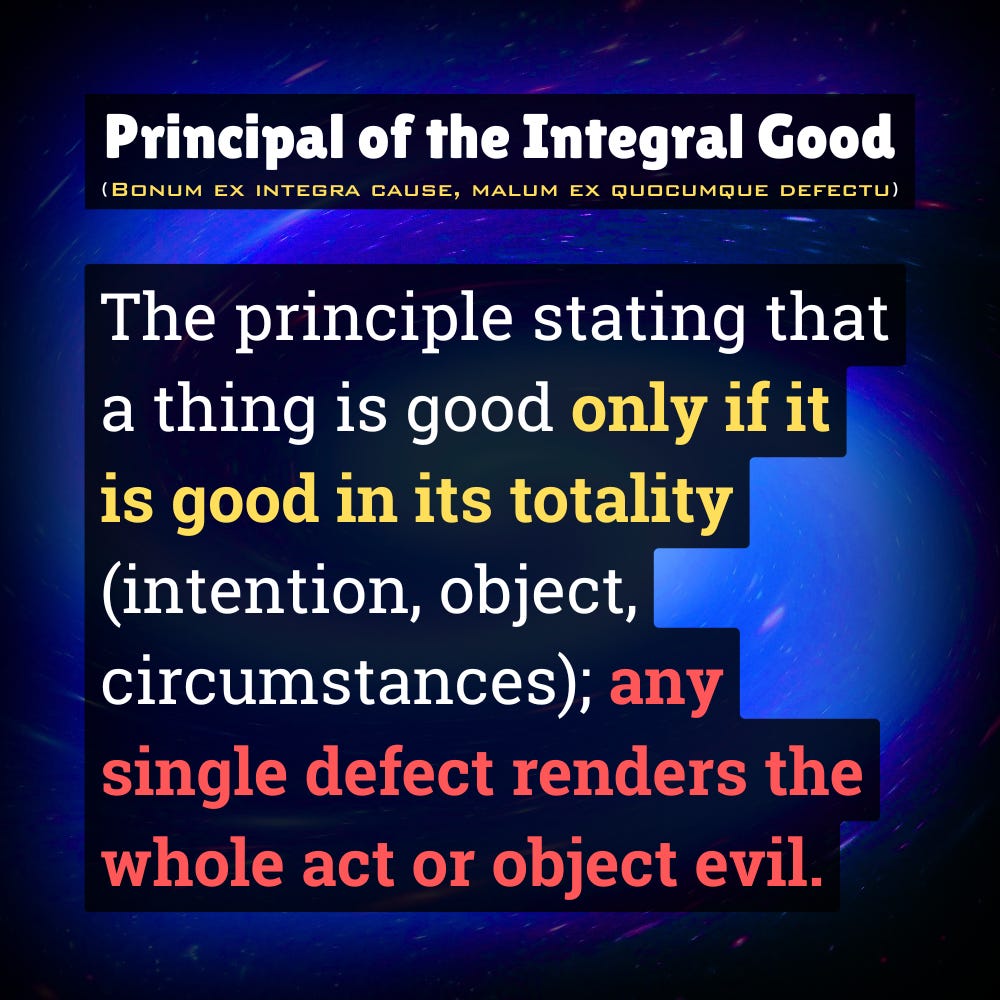
View the Full Album Here: https://imgur.com/a/MvMuu2s
View the list of words & terms at the very bottom of this article.
Subscribe for more deep dives into the intersection of technology, theology, and truth.
My First Video on Internet Daemons
For More on Thomistic Philosophy:
See the bottom of this article for a table of select ‘Scholastic Words & Terms’ from the Thomistic Philosophy Lens (many definitions by Fr. Ripperger)
Father Chad Ripperger’s Model of Diabolic Psychology: https://docs.urbanodyssey.xyz/bible/chad-ripperger.html
Fr. Ripperger Playlist https://www.youtube.com/playlist?list=PLeZ164ZSzHeyq2nS3QRYD7HPHfQAGpYsd
Thomistic Psychology: https://docs.urbanodyssey.xyz/bible/thomistic-psychology.html
Select Notes on Summa Theologica: https://docs.urbanodyssey.xyz/bible/summa-theologica.html
Mark Fisher & Flatline Constructs: https://docs.urbanodyssey.xyz/reading/flatline-constructs.html
Nick Land Notes: https://docs.urbanodyssey.xyz/reading/nick-land.html
An Introduction to Thomistic Psychology

Select Source Overview
View the sources I’ve compiled on Thomistic Psychology along with a few dictionaries that are useful: https://u.pcloud.link/publink/show?code=kZK4hU5Ze3i6mNPIvP0Tsy9URmKPW0cFM5rk
I also based some information off of St. Thomas Aquinas’ Summa Theologica which is included in the pCloud Drive Link above.
Thomistic Psychology (Robert Edward Brennan)
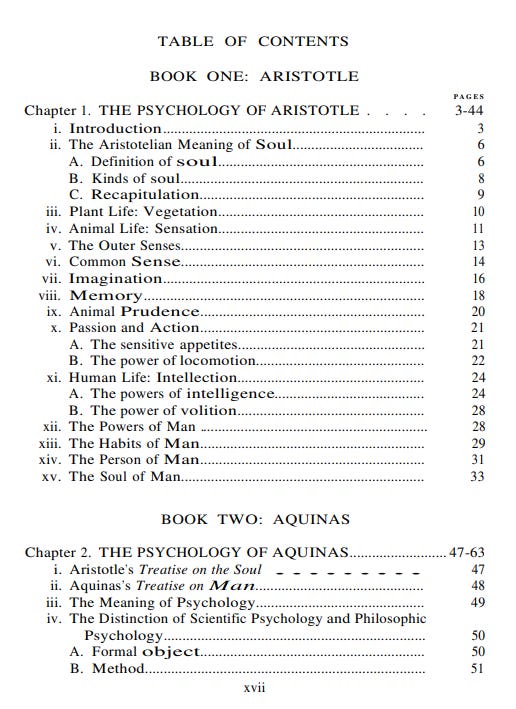
This source is an introduction and initial chapter from Robert Edward Brennan’s Thomistic Psychology, a work dedicated to unifying scientific research with the philosophic analysis of the nature of man. The text primarily explores the Aristotelian foundation of psychology, defining the soul not as a mysterious ghost, but as the substantial form or “first actuality” of an organized body that is potentially alive. By tracing the hierarchy of life from vegetative functions to sensitive cognition and finally to rational intellection, the author demonstrates how human nature virtually contains all lower biological powers while transcending them through the creative and receptive intellect. Ultimately, the text serves to bridge the gap between ancient wisdom and modern experimental findings, arguing that a true understanding of the human person requires a synthesis of empirical data and the perennial truths of Aristotle and St. Thomas Aquinas.
Sin: A Thomistic Psychology (Steven J. Jensen)
This text explores Steven J. Jensen’s Thomistic psychology of sin, which examines how human beings can choose evil while possessing a nature fundamentally designed for the ultimate good. Jensen defends Thomas Aquinas against critics who argue that his focus on intellectual ignorance minimizes the role of the will or fails to account for the complexity of moral failure. Central to this defense is the distinction between the formality of the ultimate end—the abstract desire for complete fulfillment—and the concrete realization of that end, which for Aquinas is found only in the vision of God.
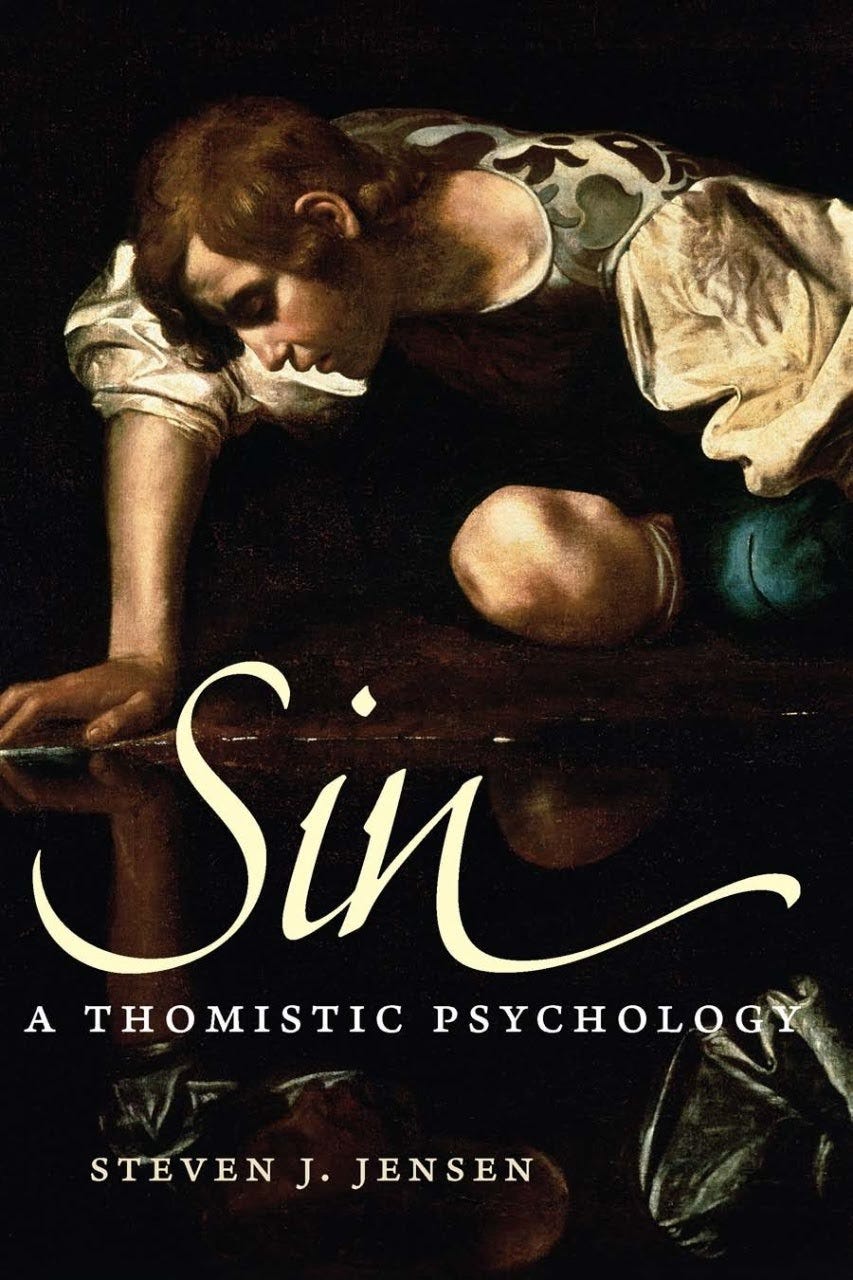
The author clarifies the “enigma of an evil will” by categorizing the ways human actions relate to their goals through actual, virtual, and habitual orders. While a person may not always consciously think of God, their actions can remain virtually directed toward Him; sin occurs when this order is disrupted by a disordered pursuit of a lesser good. To explain how diverse human interests coexist with a single ultimate goal, Jensen evaluates different models of value, ultimately championing the strong-set view. This perspective maintains that while there are many inherent goods worth pursuing for their own sake, they only truly fulfill the person when they are subordinated to the chief good of the divine. Finally, the text suggests that the mystery of sin lies in a psychological tension where the sinner possesses enough knowledge to be responsible for their choice, yet enough ignorance to perceive a defective good as a source of happiness.
The Human Person: A Beginner’s Thomistic Psychology (Steven J. Jenson)
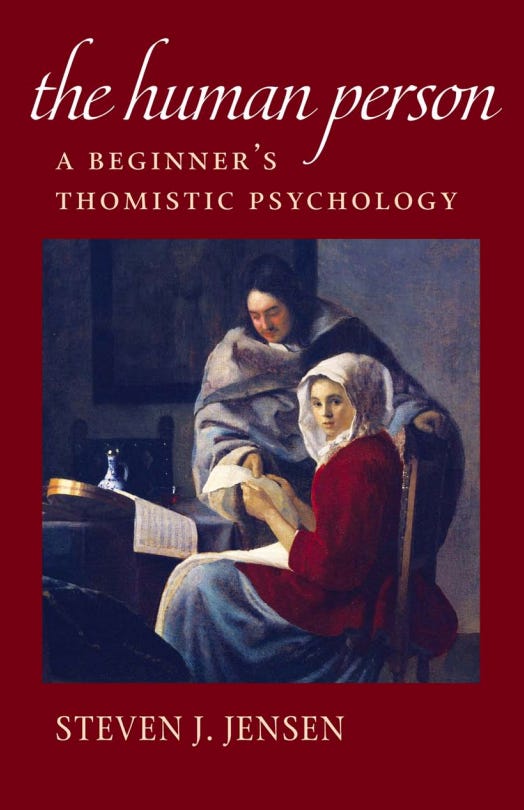
Steven J. Jensen’s work provides a comprehensive introduction to Thomistic psychology, exploring the nature of the human person through the lens of St. Thomas Aquinas. The text establishes that human knowledge begins with sensation, arguing for a sense realism where our perceptions directly connect us to the objective world rather than being trapped within internal mental images. Jensen systematically categorizes the internal architecture of the person, moving from the external and internal senses—such as imagination and memory—to the complex world of conscious inclinations and emotions. He distinguishes between concupiscible emotions, which respond to simple goods and evils, and irascible emotions, which deal with objects that are difficult to attain or avoid. Ultimately, the book serves to define the human person as a rational animal, emphasizing that our dignity and individuality are found in our unique capacity for reason and will to transcend mere instinct.
Thomistic Philosophy (Vols. I-IV)
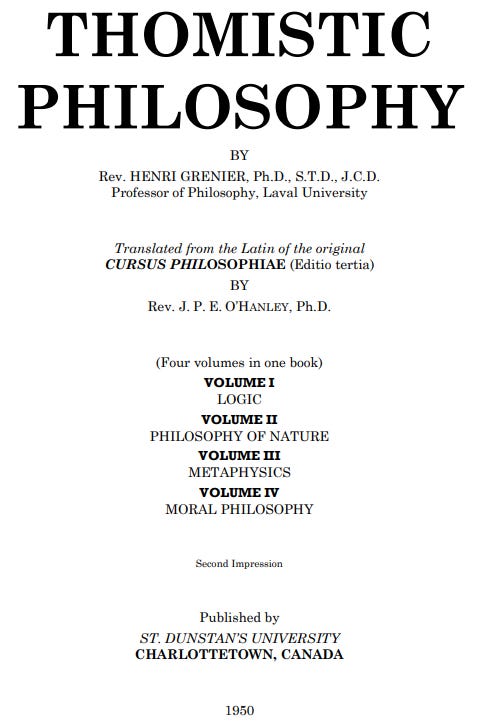
This excerpt from the 1950 English edition of Thomistic Philosophy presents a comprehensive manual on the scholastic tradition, specifically the “perennial philosophy” of Aristotle and St. Thomas Aquinas. The text acts as a pedagogical roadmap, beginning with a General Introduction that defines philosophy as the science of things through their first causes under the light of natural reason, distinguishing it from the supernatural light of sacred theology. The material is structured according to the classic divisions of the Thomistic curriculum, moving from the laws of thought in Logic to the study of the physical world in the Philosophy of Nature, the investigation of being in Metaphysics, and the principles of human conduct in Moral Philosophy. Within the section on Logic, the author provides meticulous definitions of mental, oral, and written terms, explaining how the human intellect progresses from simple apprehension to judgment and finally to reasoning. Ultimately, the text serves to preserve and spread the “golden wisdom” of Aquinas to the modern world, arguing that these analytical principles are essential for defending the Catholic faith and ensuring the stability of social and civil order.
The Crisis of Modern Psychology: A Historical Critique
The contemporary university department of psychology exists in a state of terminal fragmentation, posing an existential threat to the integrity of the academic mission. This crisis is not the result of insufficient data, but of a catastrophic failure to define a common subject matter. In its desperate bid for “independence” from philosophy, modern psychology has merely exchanged a rigorous inheritance for a series of conflicting, surreptitious “points of view”—Behaviorism, Gestaltism, and Psychoanalysis—each operating as a restricted sect rather than a unified science. This has birthed the “Ph.D. industry,” a research apparatus that produces an unintelligible jumble of factual data devoid of any stabilizing theory. By shutting the front door on traditional wisdom, the discipline has allowed conceptual disorders to enter through the back, frustrating the significance of its own experimental findings.
The Stages of Disintegration
The historical trajectory of the field, ironically termed a “gradual enlightenment,” reveals a systematic descent into psychological nihilism. This disintegration occurred in three strategic stages:
The Loss of the Soul: Under the influence of Cartesian dualism, the soul was stripped of its role as the substantial form of the body, reducing man to an “unextended mind” and an “extended machine.”
The Loss of the Mind: Materialists like Hobbes and the subsequent Platonic fallacies of Locke, Berkeley, and Hume reduced mental life to a mere “association of ideas” or transient “states of consciousness.”
The Loss of Consciousness: Finally, the Behaviorist revolt abolished consciousness entirely, submerging the discipline within the province of pure biology and physiology.
The Cartesian Mistake and the Positivist Incubus
“The Cartesian Brain-Split (Schizophrenia / Double-Mindedness)”
At the root of this collapse is the “Cartesian Mistake:” the ontological error of regarding mind and body as two separate, independent substances. This dualism created the “mind-body problem,” a knot that remains untied because modern researchers remain under the “crippling incubus” of positivism—a paradox where philosophy is employed to deny the validity of philosophy itself. To move beyond this impasse, the department must reject the “polluted streams” of modern dualism and return to the Aristotelian-Thomistic “Synolistic” approach. We must define the subject not as a ghost in a machine, but as a single, substantial integer whose mental and physical operations are inextricably linked.
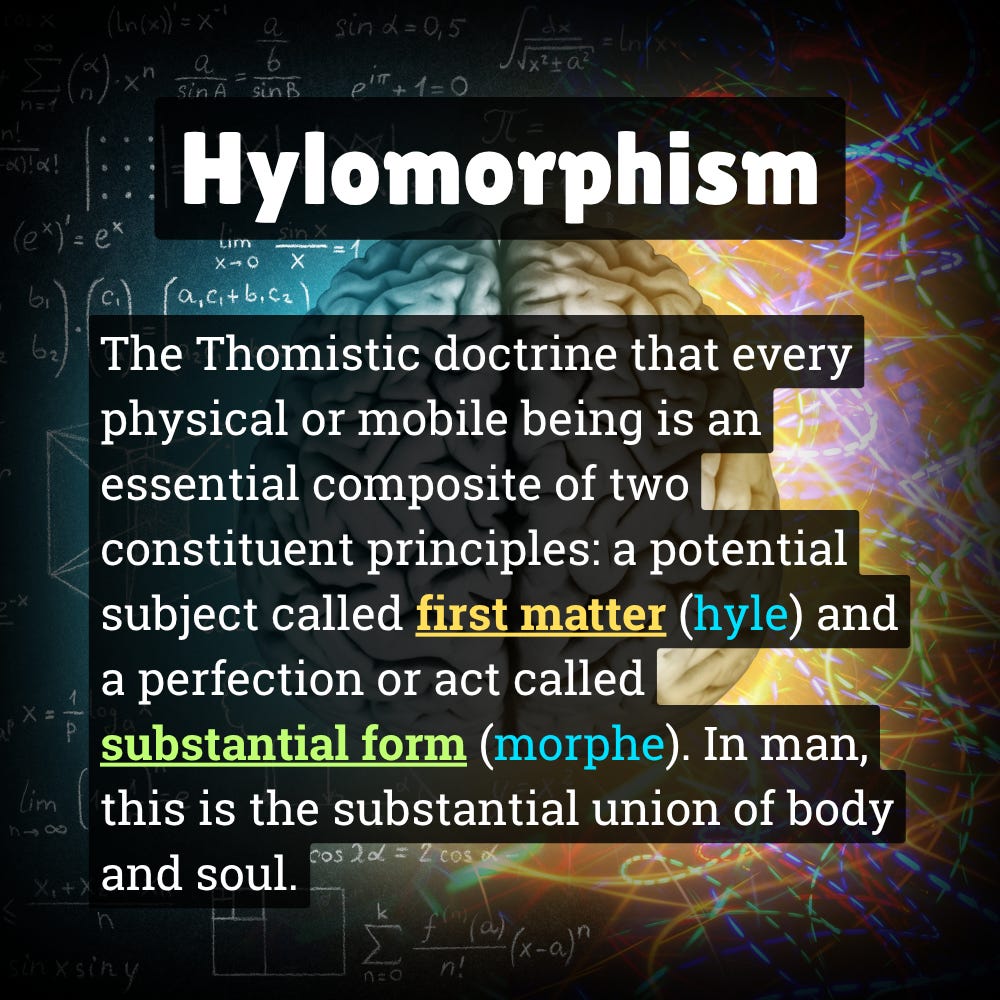
The Hylomorphic Rationale: Man as a Substantial Integer
The strategic foundation for a unified department must be Hylomorphism. This doctrine provides the only stabilizing principle capable of grounding experimental findings in a sound analysis of human nature. Hylomorphism asserts that every individual substance is a composite of two principles: First Matter and First Form.
The Constitutive Principles of the Human Integer
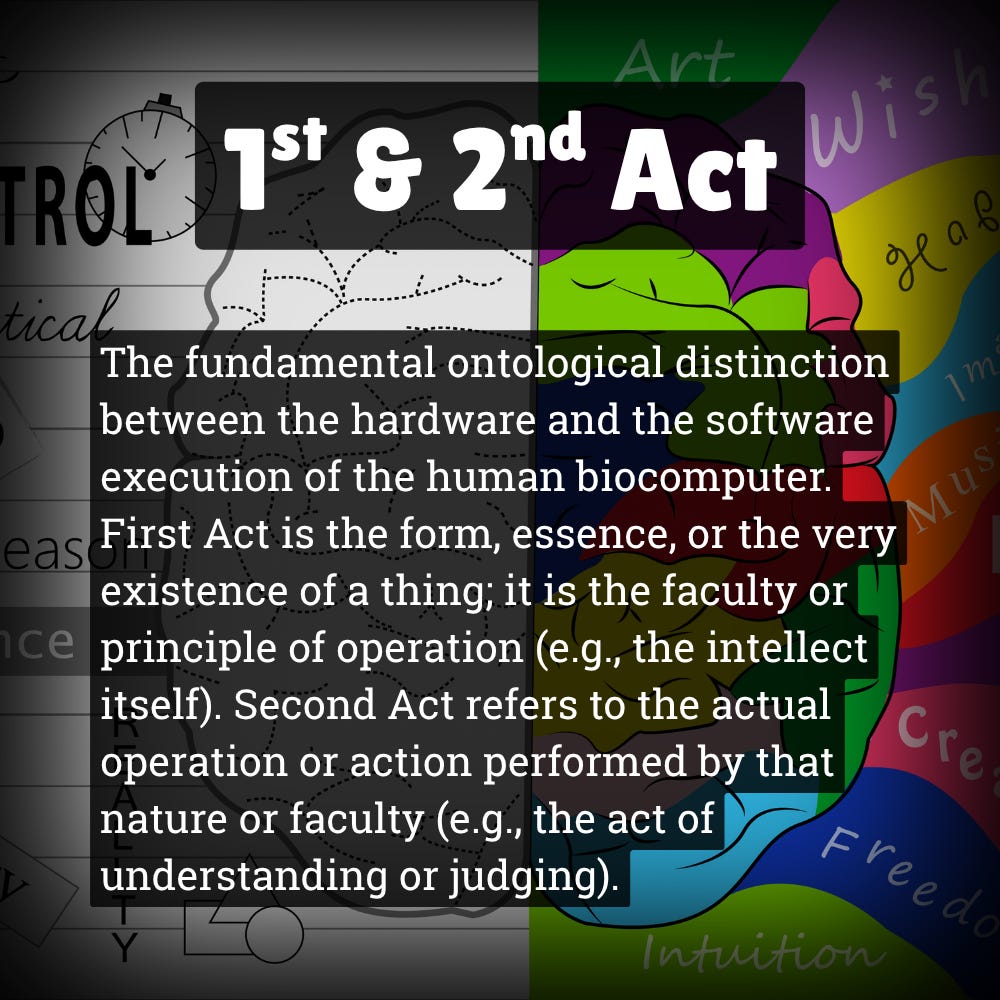
Proofs of Man’s Hylomorphic Nature
The return to the hylomorphic model is demanded by the following analytical proofs of our psychosomatic reality:
Psychosomatic Unity: Human acts such as sensation and emotion are unit experiences. An emotion is not a psychic state plus a bodily change; it is a single act with formal (soul) and material (body) coefficients.
Mutual Influx: The higher and lower powers of man influence one another in a biological reality. For example, intense abstract study (rational) can visibly slow vegetative digestion; conversely, violent passions (sensitive) can cloud the reason.
Unity of the Ego: Personal identity through time requires a single substantial subject. One is conscious that it is the same “I” who thinks, feels, and eats, despite the constant flow of material parts through the organism.
Critique of Modern Alternatives
Alternative models fail the “Integer” test. Interactionism (Plato/Descartes) treats the soul as a pilot in a ship, failing to account for the intimacy of psychosomatic experience. Parallelism fails even more spectacularly. Whether we adopt Wundt’s Double-Clock analogy (two systems running side-by-side without causal links) or Fechner’s Concave-Convex Lens (two phases of the same thing seen from different sides), these models collapse into either pure materialism or pure idealism. They cannot explain the unified reality of the human person. Once the subject (Man) is correctly defined as a hylomorphic unit, the methods for studying him must be properly ordered.
Methodological Framework: Reconciling Science and Philosophy
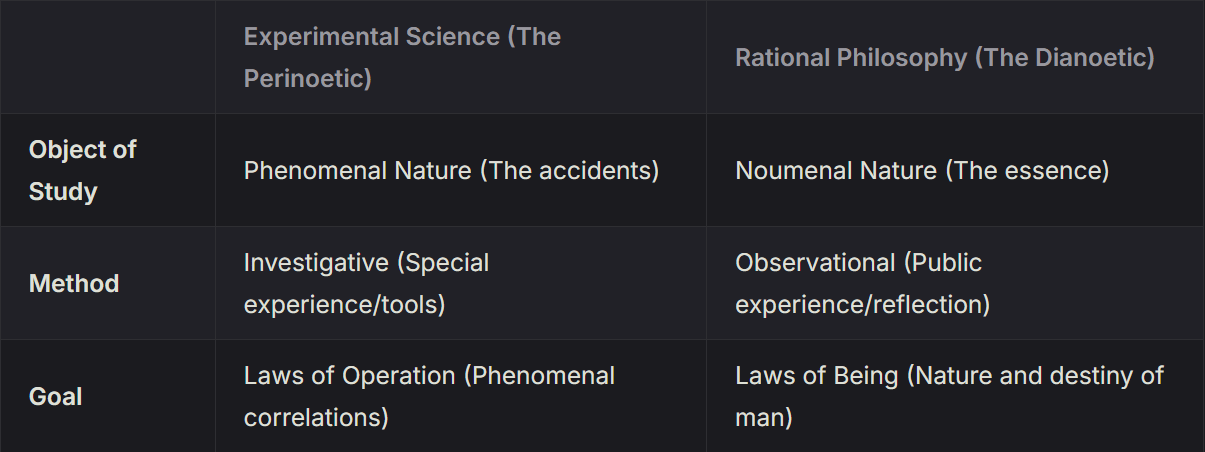
A unified department must employ a dual-method approach, recognizing that scientific research is inadequate by itself. It requires a philosopher’s analysis of human nature for true interpretation; without philosophy, science is a “jumble of factual data.” Conversely, without science, philosophy lacks the “refinement of experience” provided by modern laboratory research.
Experimental Science vs. Rational Philosophy
Strategic Implementation of Introspection
The Department of Psychology shall mandate a dual-track laboratory protocol regarding Introspection:
Track A (Scientific): Introspection will be employed as a “scientific tool for special experience,” utilizing Külpian fractional self-observation and methodical periods of self-analysis to isolate phenomenal data.
Track B (Philosophic): Introspection will be utilized as the “spontaneous utterance of the sense of reality”—the public experience common to all men that verifies the universal and essential laws of being.
Curricular Structure: The Hierarchy of Human Operations
The curriculum shall follow the principle of “virtual containment,” acknowledging that the human soul contains the vegetative and sensitive powers of lower species, elevating them to a rational context.
Level I: The Vegetative Life (The Biological Foundation)
This level synthesizes data on nutrition, growth, and reproduction. Students will analyze how the “autonomic system” integrates these acts without conscious control. The focus remains on how the organism assimilates matter and preserves itself, serving as the necessary material foundation for higher life.
Level II: The Sensitive Life (The Animal Roots)
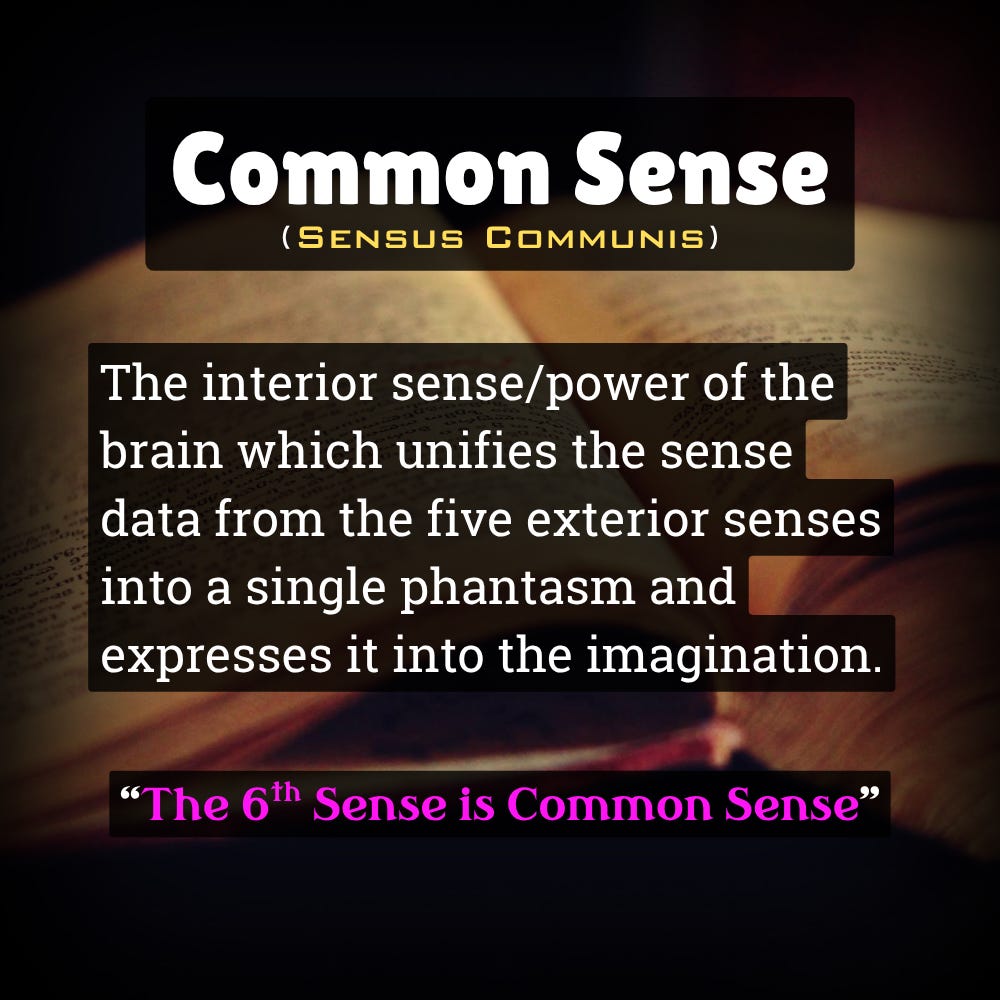
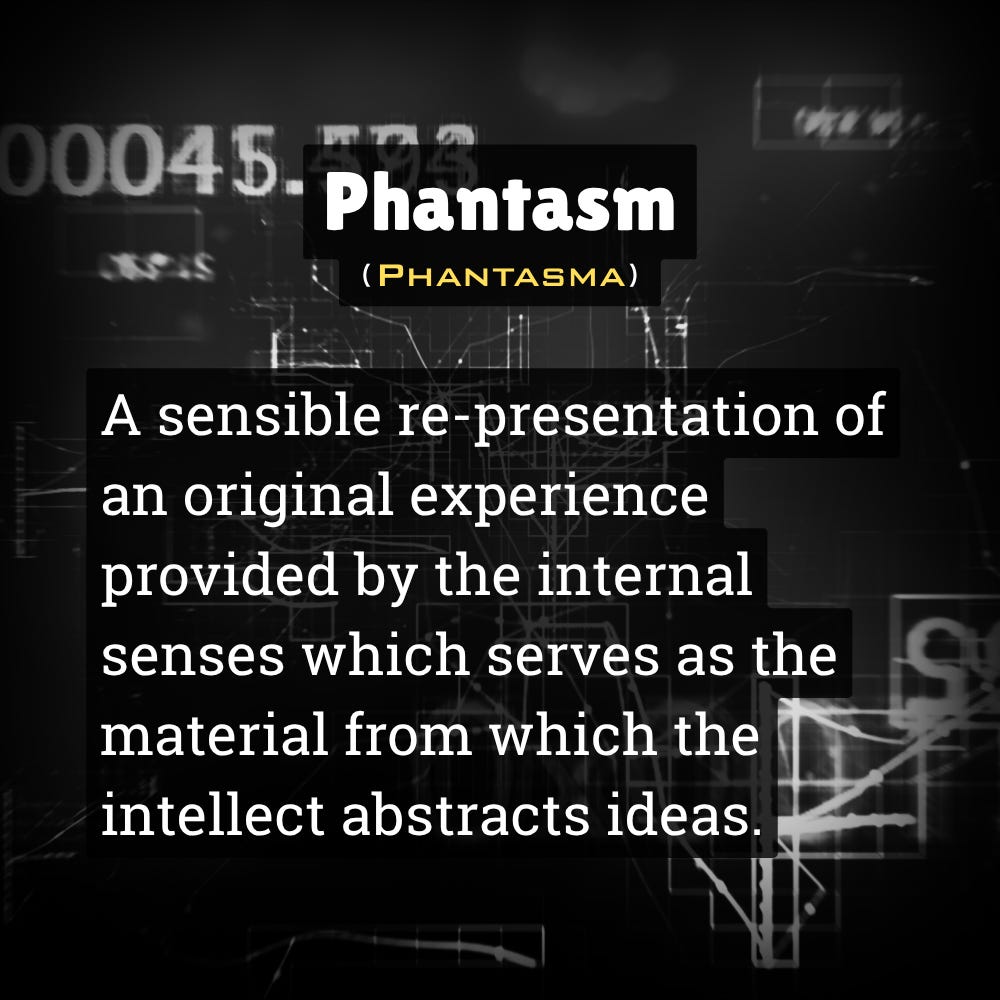
This level explores the internal senses shared with animals, focusing on:
Common Sense: The central sensorium that synthesizes diverse sensations into a unit perception.
Imagination: The power to form and retain the Phantasm.
Memory: The retention of the past and the recollective search for images.
Estimative Power (Prudence): The instinctual recognition of biological values. Curricular Mandate: Instructors must emphasize the Phantasm as the indispensable bridge between the animal roots and the human intellect. Without the Phantasm, the “Integer” collapses and intellectual life becomes impossible.
Level III: The Rational Life (The Human Distinction)
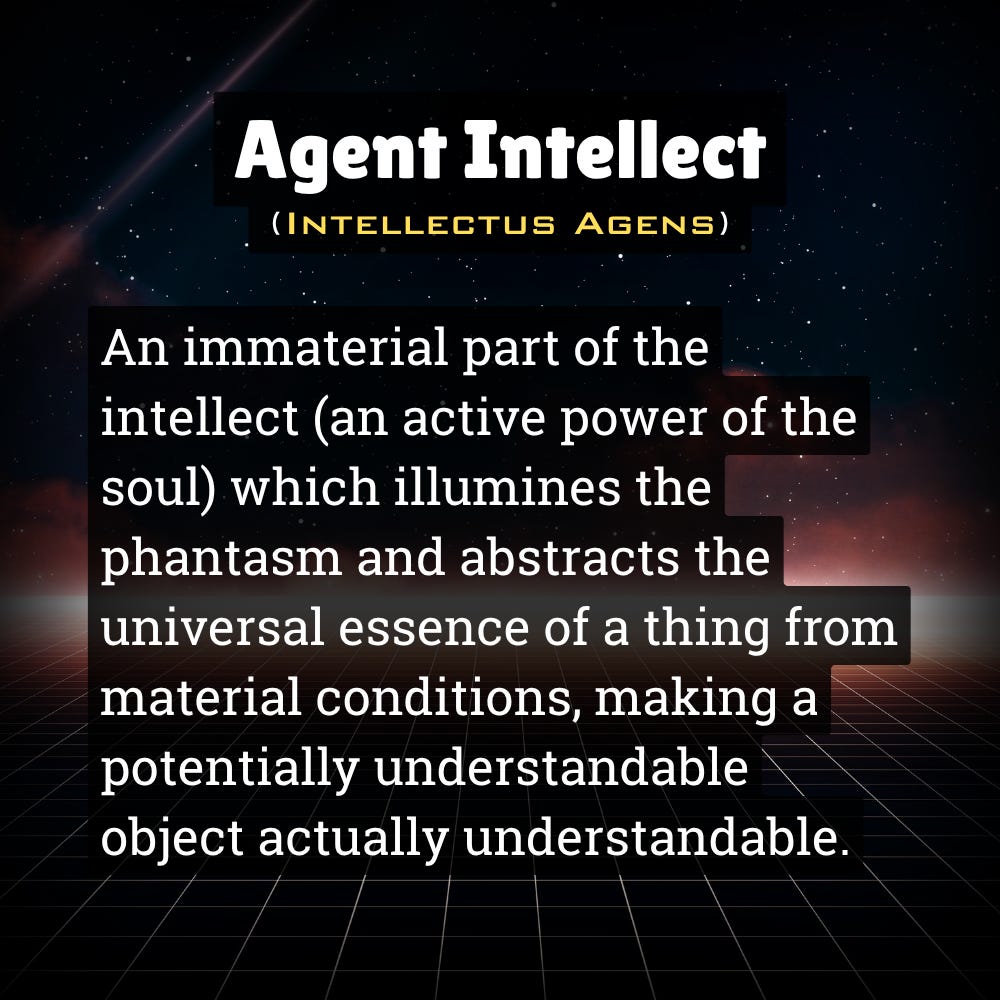
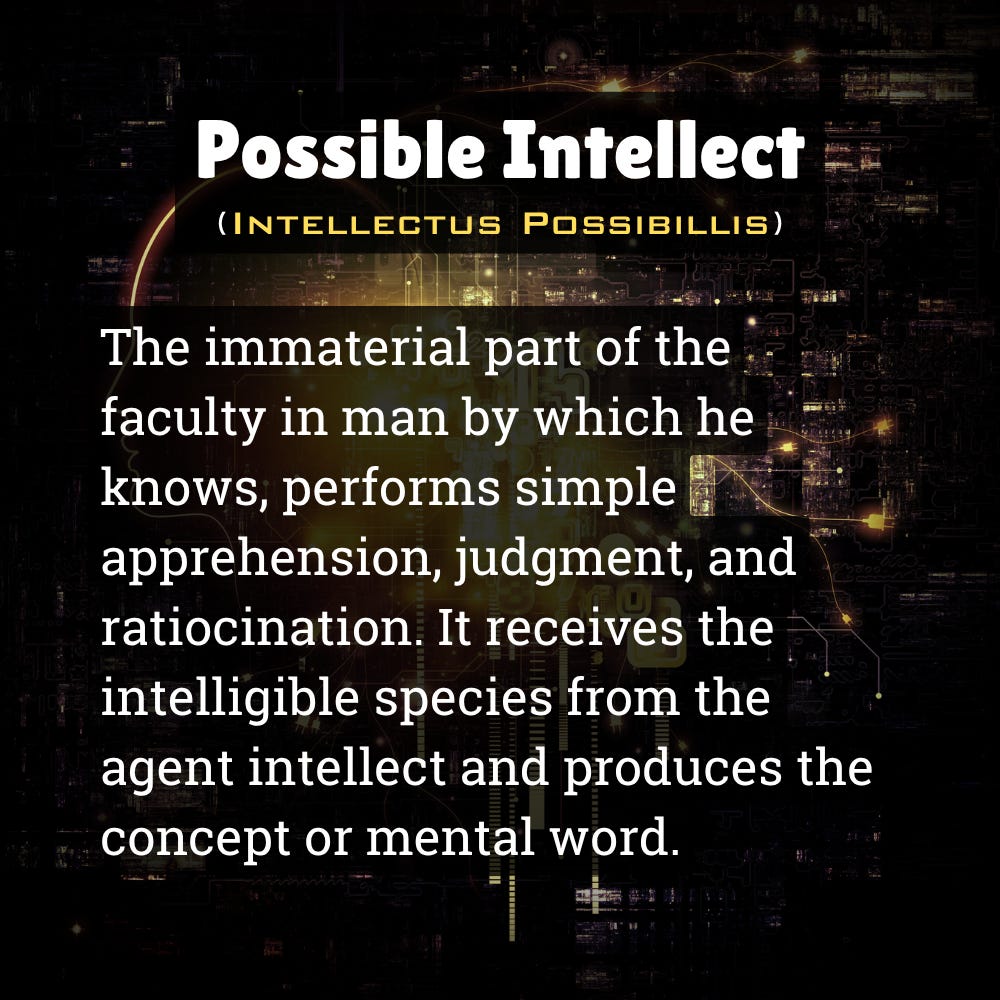
The apex of the curriculum analyzes the two intellects:
The Poietic (Agent) Intellect: An active power that “illuminates” the phantasm, creating intelligibility by abstracting universal essences from concrete experience.
The Receptive (Possible) Intellect: The power that receives the intelligible form, enabling conception, judgment, and reasoning.
Thomistic Classification of Powers and Habits
A unified department must categorize operational perfections as follows:
Intellectual Virtues (Habits of the Intellect):
Speculative: Understanding, Science, Wisdom.
Practical: Art, Prudence.
Moral Virtues (Habits of the Appetite):
Justice (Will).
Temperance (Concupiscible Appetite).
Fortitude (Irascible Appetite).
This hierarchy ensures no part of human nature is overlooked, from the cell to the spirit.
Strategic Outcomes: The Perennial Wisdom in Modern Context
The true meaning of psychology is the study of the “acts, powers, habits, and nature of man.” This curricular strategy provides a profound value proposition for the student’s intellectual health and the university’s reputation as a bastion of European culture.
Strategic Remediation Goals
Our graduates will be equipped to achieve three primary remediation goals:
Avoiding Positivism: Overcoming the narrow prejudice that rejects theology and philosophy, thereby recognizing the limits of “phenomenal correlations.”
Correcting Moral Philosophy: Countering the contemporary corruption of ethics that results from denying human rationality and freedom.
Restoring Perennial Wisdom: Reconnecting the student with the “perennial spring” of wisdom flowing from Aristotle and Aquinas.
The edifice of psychology must be built on these foundations. To ignore the substantial unity of man is to condemn the discipline to be an “unintelligible jumble.” By integrating science and philosophy, the university ensures that its students are not drinking from the polluted streams of modern error, but from the perennial spring of the Angelic Doctor.
Thank you to everyone who tuned into my live video! Join me for my next live video in the app.

Timestamps
00:00:00 Introduction: reckoned with time
00:05:51 Defining Ontology: From Aristotle to the Semantic Web
00:12:08 Templexity: Insurance, Debt, and Financial Time Travel
00:17:18 Hyperstition: Spell-Casting and Social Engineering
00:23:28 Pandemonium Matrix: The CCRU and Demonic Invocation
00:30:03 The Neuro-Electronic Flatline and "Unlife"
00:35:02 Schizophrenia as a Cybernetic Map
00:38:45 Thomistic Philosophy: The Science of Ultimate Causes
00:43:08 The 12 Principles of Reality vs. Modern Evolution
00:54:25 Hacking the Bio-Computer: The Internal Senses
01:02:11 Diabolic Obsession and the Manipulation of the Phantasm
01:08:15 Mortification and the Restoration of the Divine Rule


