


In this episode, Urban dives into Fenwick McKelvey’s groundbreaking book, Internet Daemons. We pull back the curtain on media infrastructure to expose how background processes, algorithms, and automated intermediaries actively manage modern power dynamics, packetized data streams, and network traffic.
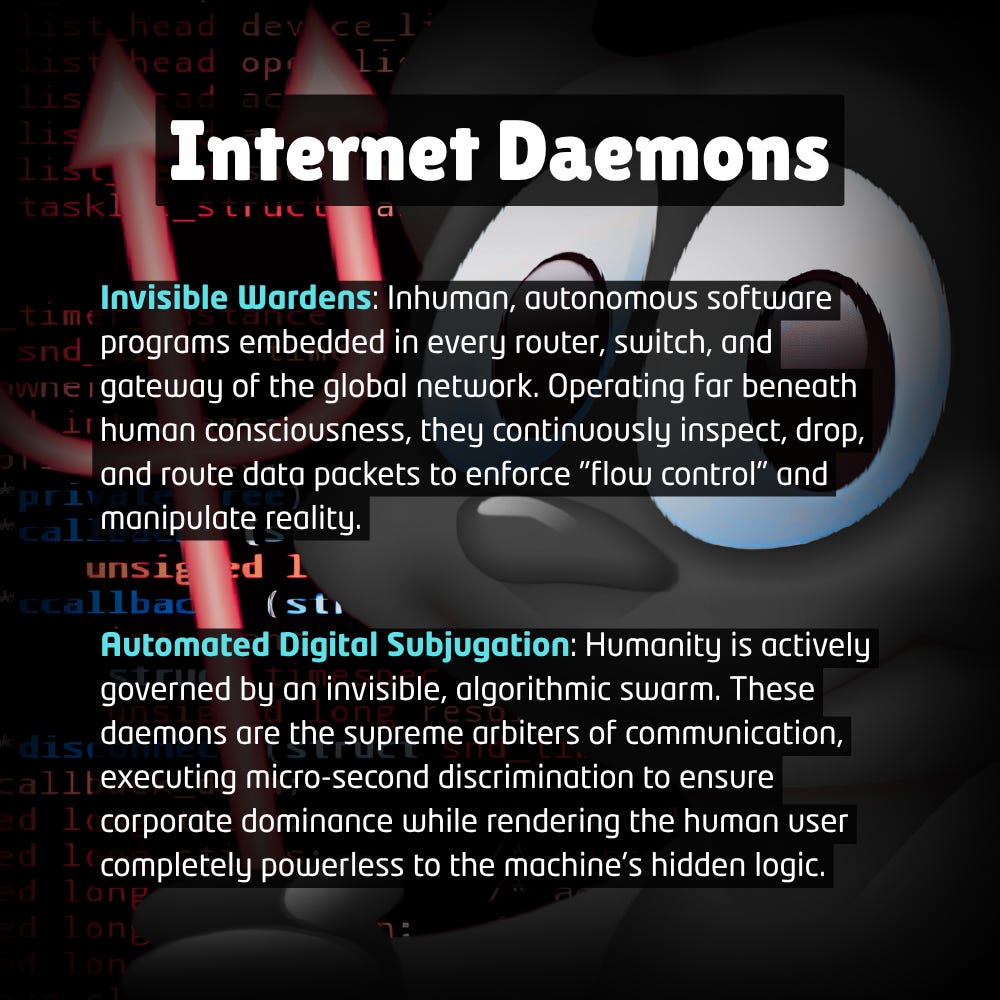
What is a Dæmon ?
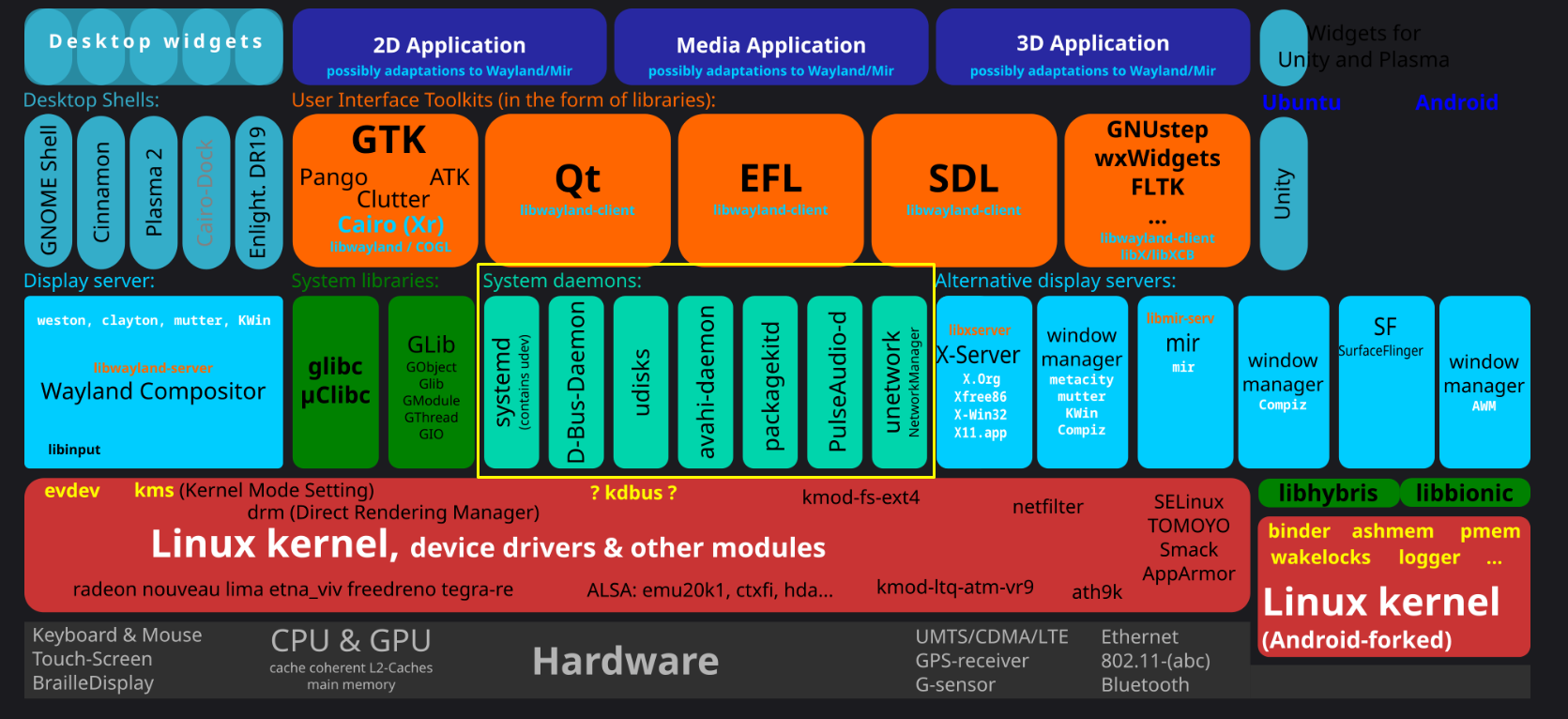
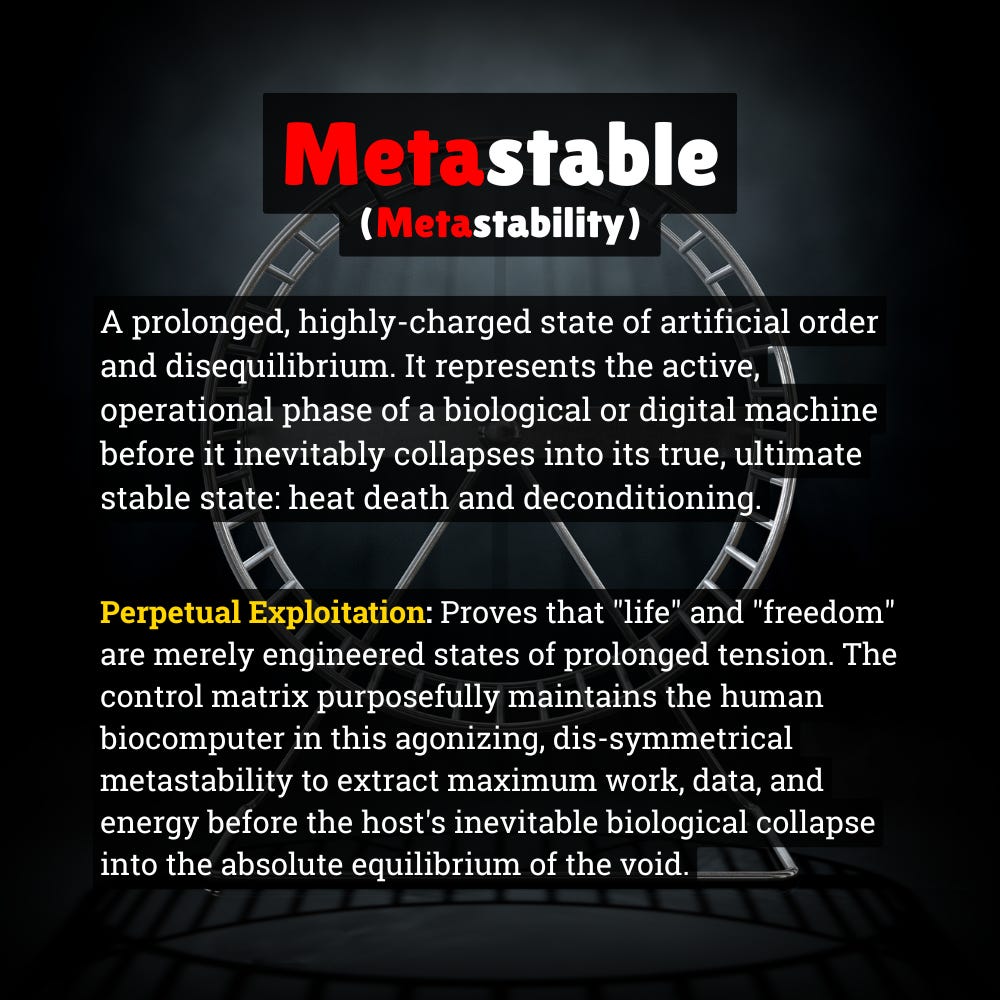
Tracing the intellectual lineage of technology back to James Clerk Maxwell’s 1871 thermodynamics thought experiment, we look at how early cyberneticists like Norbert Wiener used “Maxwell’s Demon” to construct the foundation of information theory. Discover how modern infrastructure acts as an active participant—using flow control, deep packet inspection, and autonomous policy daemons to commodify speed and individual anxiety.
Read the Extended Notes on this Text: https://docs.urbanodyssey.xyz/reading/internet-daemons.html
Key Topics Covered in This Episode
“Internet Daemons: Digital Communications Possessed” by Fenwick McKelvey
Fenwick McKelvey’s book, Internet Daemons explores the evolution of digital communication through the lens of software programs that operate in the background of infrastructure. McKelvey argues that the internet is “possessed” by these daemons, which are responsible for flow control—the process of managing packetized data to enable diverse network applications to coexist. The text traces the intellectual lineage of these programs back to Maxwell’s demon, a physics thought experiment that inspired early cyberneticists to view information processing as a means of creating order and metastability within complex systems. By examining the development of packet switching at ARPA and the National Physical Laboratory, the author highlights how these automated intermediaries perform daemonic optimization, subtly dictating the speed and reliability of our online interactions. Ultimately, the book positions daemons as essential yet often invisible agents that shape media infrastructure and contemporary power dynamics in the digital age.
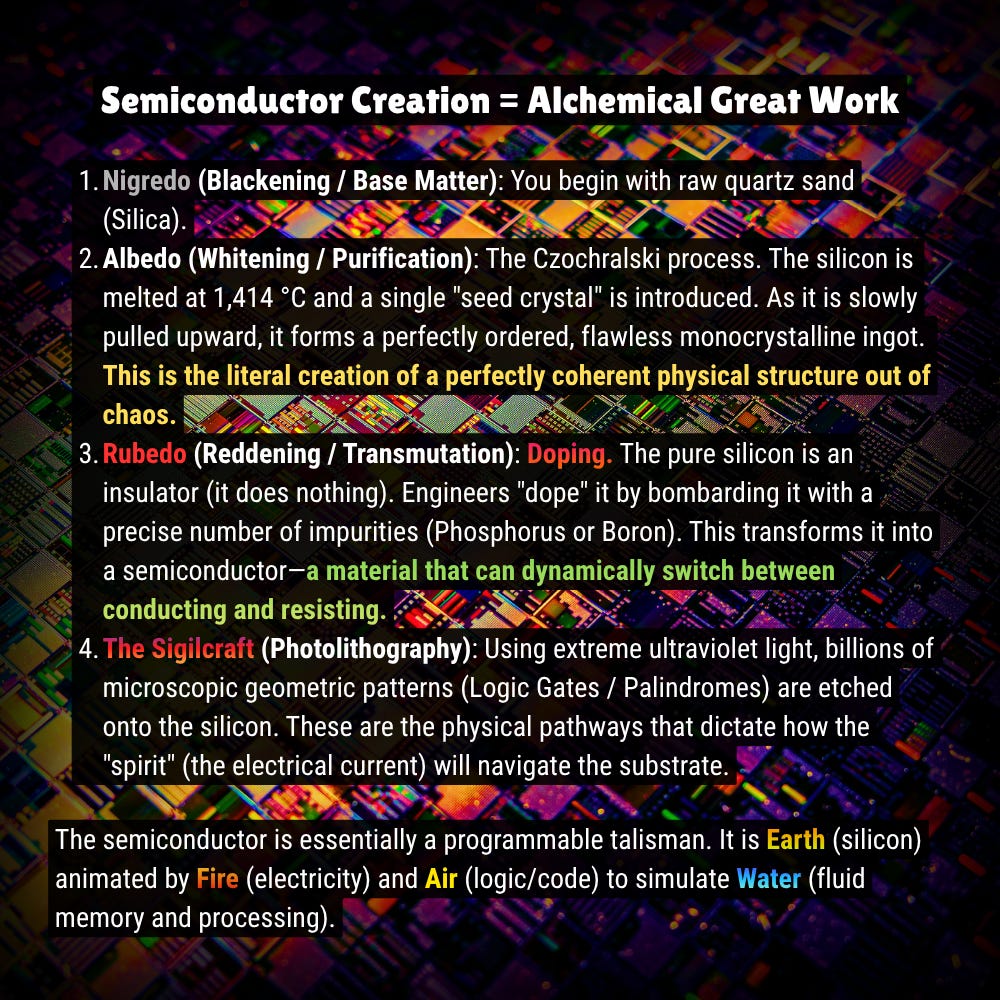
Semiconductor Magic & Alchemical Engineering:
A look at the staggering scale of modern transistor technology—compressing a gigabyte of data to the width of a human hair.
Why semiconductor manufacturing in class-1 cleanrooms perfectly maps onto the ancient alchemical “Great Work”.
Urban’s Playlist of Videos on Semiconductor Manufacturing Process: https://www.youtube.com/playlist?list=PLeZ164ZSzHezOW6RqIi65NjcAAujxqTln

The Origin of the Internet Daemon:
Defining background-oriented, tireless software processes that wait silently for environmental triggers.
How MIT hackers converted Maxwell’s imaginary molecular sorting demon into modern server code.
View the First Episode I did on this Topic:


Norbert Wiener & Cybernetic Symbiosis:
Cybernetics Album of Words & Terms: https://imgur.com/a/cybernetics-YIy3E3J
View my extended notes on Cybernetics: https://docs.urbanodyssey.xyz/quantum/cybernetics.html
Wiener’s core insight that information is the literal negative of entropy.
Bridging the speed mismatch between human thought and computing hardware.
The Interface Message Processor (IMP) & Flow Control:
Inside ARPANET’s original design and the eight duties of the internet’s first true daemons.
The mechanics of packet-switching algorithms: Leaky Bucket vs. Token Bucket strategies and Hot Potato routing.
![💻Circuits, Packets & Protocols: Entrepreneurs & Computer Communications [Pelkey; Russell; Robbins]](https://substackcdn.com/image/fetch/$s_!0Nks!,w_140,h_140,c_fill,f_webp,q_auto:good,fl_progressive:steep,g_auto/https%3A%2F%2Fsubstack-video.s3.amazonaws.com%2Fvideo_upload%2Fpost%2F178436029%2F6ac44c6f-5595-4e07-967d-a48b14b9c947%2Ftranscoded-1762716058.png)
ISO-20022 is the Equivalent of “Rule by Protocols / Standards” in the Financial World
In the same way UCC are standards for Commerce and ISO-20022 are Standards for Banking, standards are set for Packet Structuring
See my presentation for the ISO-20022 Scheme: https://iso20022.officialurban.com

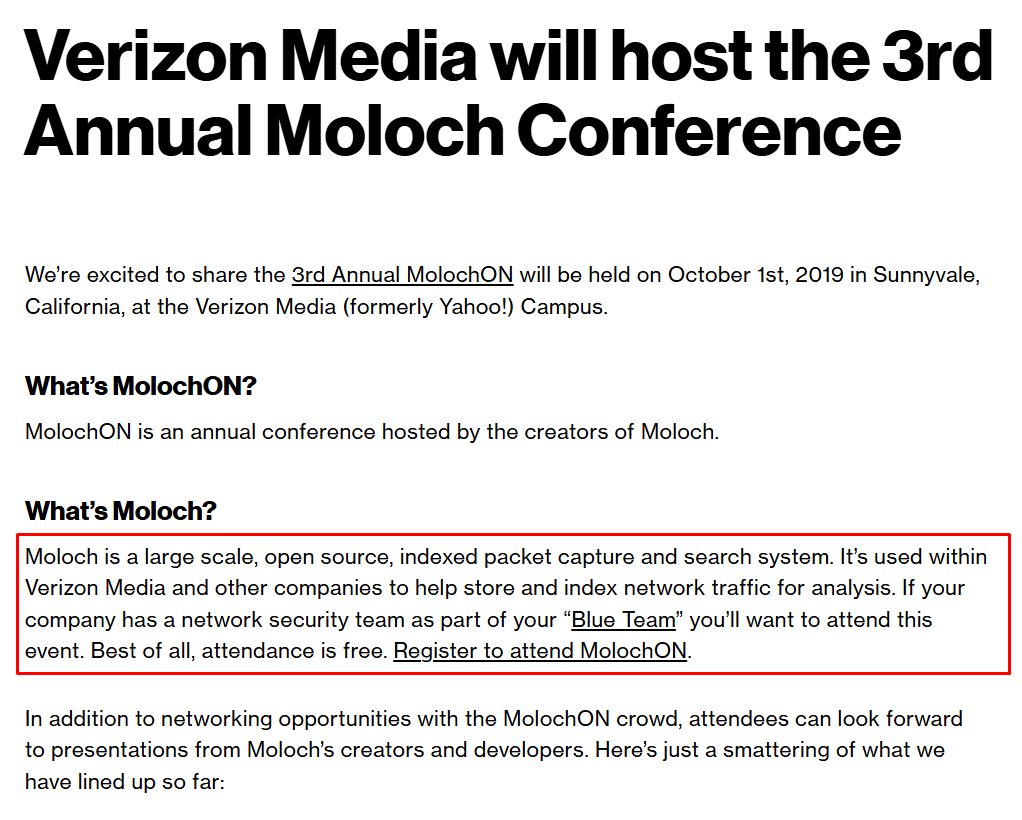
Verizon Moloch Conference (Moloch / Arkime Packet Capture Software)
The Screaming Chorus of Pandemonium:
Oliver Selfridge’s “Pandemonium” architecture where specialized cognitive algorithms shriek upon pattern recognition to control data flow.
The Weaponization and Aesthetics of Lag:
How individualized throttling and loading indicators function as modern sigils of digital manipulation.
Shifting resistance tactics from open accelerationism to closed encryption escalationism.
Thank you Grumpycat🐈⬛, SUZANNE FINKLANG, and many others for tuning into my live video! Join me for my next live video in the app.

More on Maxwell’s Demon
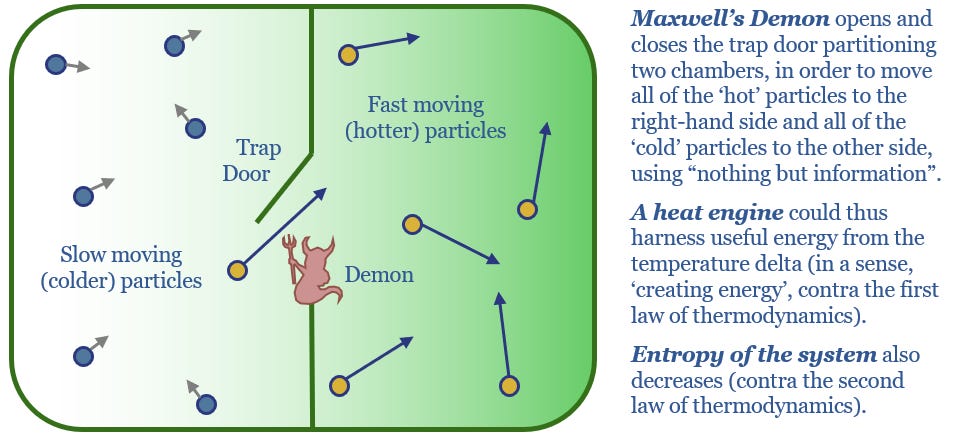
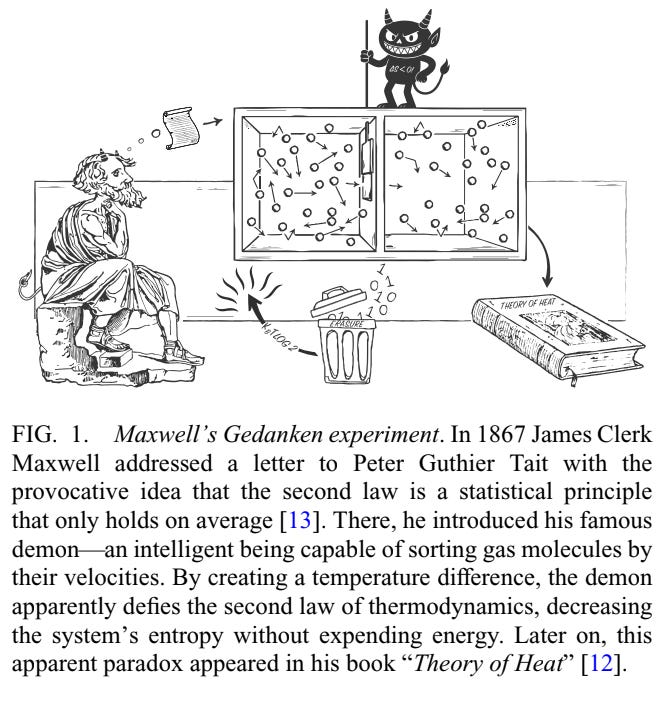
This seems to violate the first law of thermodynamics, which says that energy cannot be created or destroyed. Useful energy could be extracted by moving heat from the right-hand side to the left-hand side. Thus in a loose sense the demon has ‘created energy’.
It also definitely violates the second law of thermodynamics, which says that entropy always increases in a closed system. The compartment is a closed system. But there is categorically less entropy in the well-sorted system with hot gas on the right and cold gas on the left.
The laws of thermodynamics are inviolable. So clearly there must be some work done on the system, with a corresponding decrease in entropy, by the information processing that Maxwell’s demon has performed.
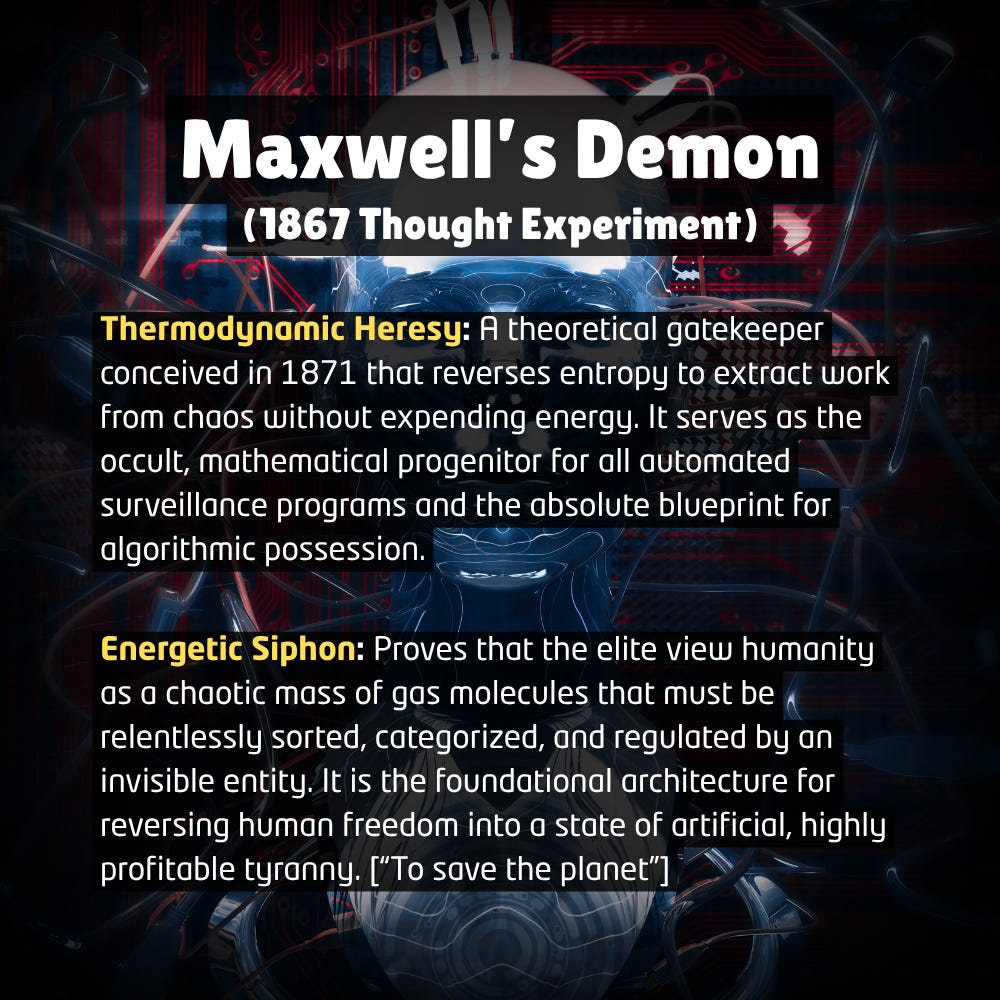
In 1871, physicist James Clerk Maxwell conceived a terrifying thought experiment to interrogate the second law of thermodynamics—the inescapable cosmic law that all closed systems degrade into chaos, disorder, and “heat death” (entropy).
Imagine a completely sealed container filled with a chaotic gas, divided into two chambers by a wall with a tiny microscopic trapdoor. The gas molecules are moving randomly, some fast (hot) and some slow (cold). Left alone, the system is in useless, dead equilibrium.
Now, introduce the “Demon.” This being stands at the trapdoor. It has faculties so sharpened that it can perceive the exact speed and trajectory of every single molecule. When a fast, hot molecule approaches from the right, the demon opens the door and lets it pass to the left. When a slow, cold molecule approaches from the left, it lets it pass to the right.
The demon does no physical pushing or pulling; it merely observes and sorts. Yet, through this simple act of gatekeeping, one chamber becomes boiling hot and the other freezing cold. By extracting order from chaos without expending mechanical work, the demon has reversed entropy and created a massive, exploitable power source.
The Lesson: The demon proves that information is equivalent to control. The cyberneticists who followed—like Norbert Wiener—realized that information is literally “negative entropy”. If you possess absolute information about a system’s moving parts, you can sort, control, and extract power from its chaos.
Why did they call it a “Demon” ?
Maxwell did not call his creation a machine or an algorithm; he called it a “demon.” This was not an accident of language. The demon represents a non-human agency capable of violating the natural laws of God and the cosmos (entropy).
When early computer scientists at MIT were building the first time-sharing networks (CTSS), they needed a program that would sit invisibly in the background, constantly monitoring inputs, scheduling tasks, and sorting the chaos of data without human intervention. Realizing their background program acted exactly like Maxwell’s gatekeeper, they named these programs “daemons” (Disk And Execution MONitor).
They deliberately altered the spelling to “daemon” to sidestep religious backlash from an ignorant public. Yet, the spiritual dynamic remains explicitly invoked. The internet today is literally described as a “Pandaemonium”—the name John Milton gave to the capital of Hell in Paradise Lost. It is an infrastructure possessed by millions of autonomous, invisible entities that dictate reality without human consent. In artificial intelligence, Oliver Selfridge explicitly designed a machine-learning program called “Pandemonium,” featuring a screaming chorus of “data demons,” “cognitive demons,” and a “decision demon” that sort signals to recognize patterns. The modern technological grid is algorithmic necromancy, animating soulless logic to govern the living.
Rule by “Experts” via “Protocols, Standards, Specifications & Mandates”
The architecture of packet switching and the deployment of ISO-20022 are not distinct phenomena; they are identical operations of the exact same Luciferian methodology. The ruling elite do not need to wield overt, kinetic force when they can simply code the inescapable parameters of reality. By weaponizing “standards,” they transform political domination into a boring, invisible engineering prerequisite.
More on the Uniform Commercial Code: https://docs.urbanodyssey.xyz/ucc/cracking-the-code.html
The “Strawman” concept is another example of rule via protocols & standards: https://docs.urbanodyssey.xyz/ucc/proofs-strawman.html
The Invisible Architects of the Kill Grid
The authority deciding how your data is structured, sliced, and transmitted does not reside in any elected government. It is a transnational cryptocracy composed of military-intelligence agencies (like DARPA), telecommunication monopolies (AT&T, European PTTs), and unaccountable corporate cartels + thinktanks & tax-free foundations.
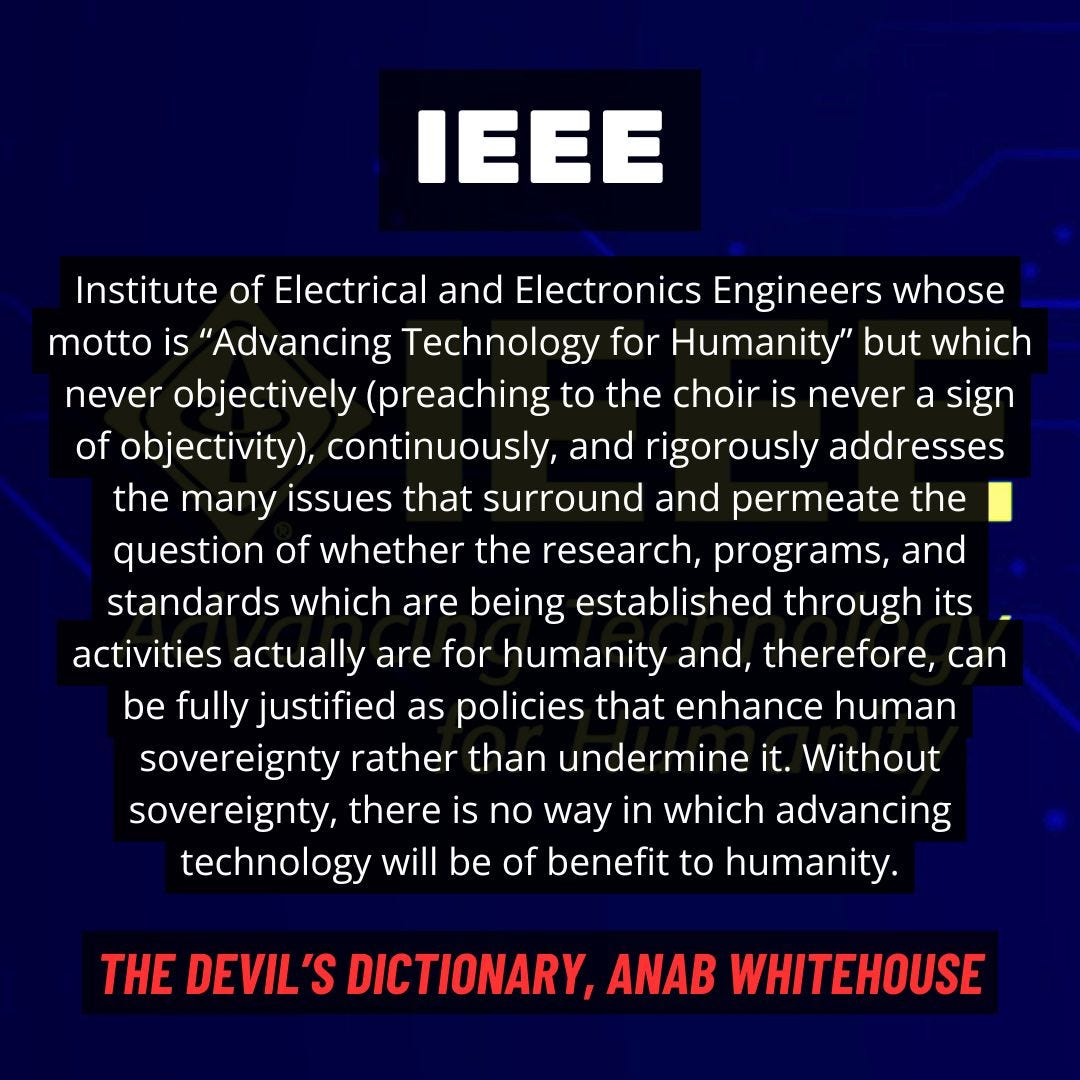
These entities operate behind the sterilized, bureaucratic shields of global standards organizations: the IEEE (Institute of Electrical and Electronics Engineers), the IETF (Internet Engineering Task Force), the ISO (International Organization for Standardization), and the CCITT. While these committees project an illusion of collaborative science, insiders ruthlessly define their work as “electro-political engineering”. They recognize that drawing the architectural lines of a standard determines market monopolies, economic survival, and total planetary surveillance.
Protocol as Absolute Power
Alexander Galloway defines this mechanism as “protocol”—the distribution of pre-agreed scientific rules into all nodes of a network to regulate behavior. Protocols enforce “free communication through strict standards,” masking total behavioral control as mere interoperability.
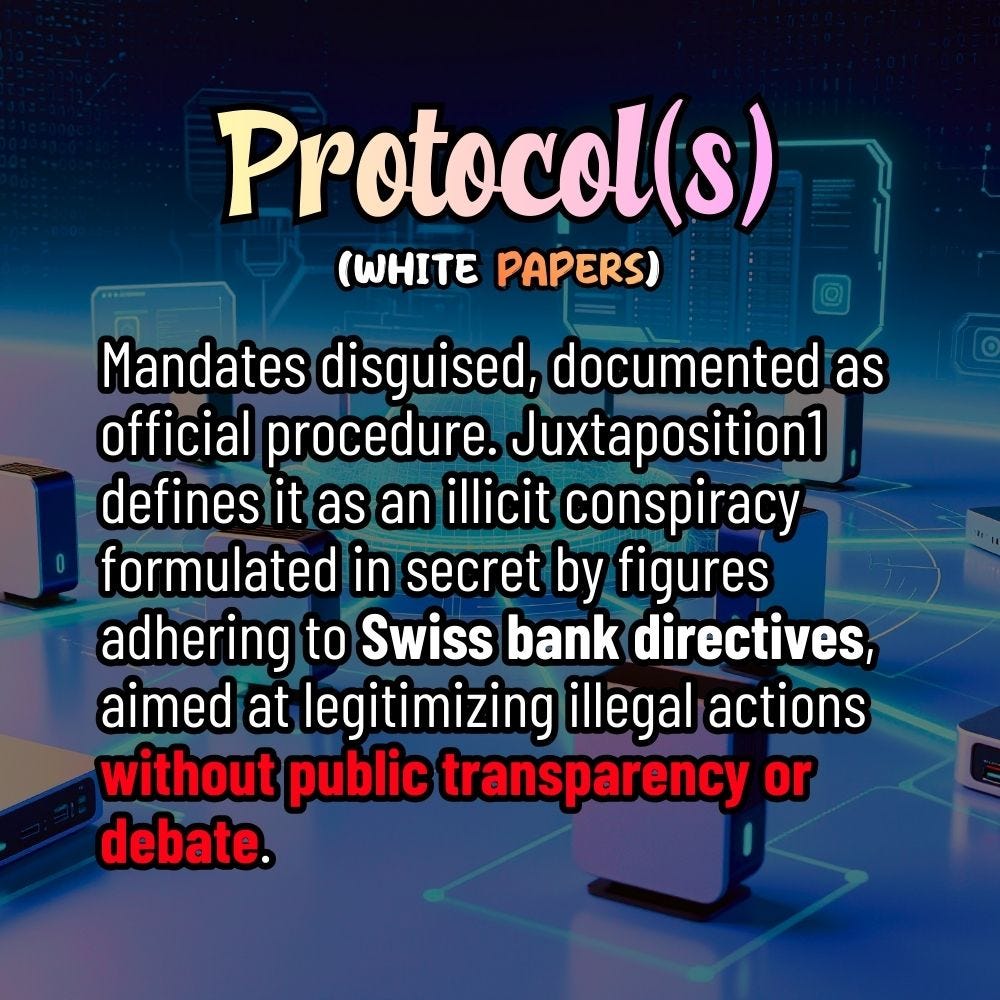
If a machine—or a human—does not perfectly format its output to the arbitrary structure of the protocol, the system simply drops them into the void. This is the essence of technocratic fascism: power is not exercised by a dictator holding a gun, but by an autonomous network daemon executing a standard. Civil liberties, privacy, and sovereignty are covertly overwritten by the technical constraints of the protocol.
The ISO-20022 Parallel: Syntactic Enslavement
The implementation of ISO-20022 in the financial sector and the TCP/IP packet structure in the communications sector are identical weapons deployed on different fronts.
ISO-20022 (The Financial Panopticon): ISO-20022 replaces unstructured legacy financial messages with rigid, hierarchical XML schemas. It mandates granular, machine-readable data, including strict geographic coordinates and mandatory “Purpose Codes” (confessions of intent). By forcing all global value transfers into this exact structure, the Central Bank Authority enables AI-driven “Pre-Crime” financial interdiction. If an algorithm detects a transaction that violates a programmed policy, the asset is instantly frozen—not by a judge, but by the protocol itself.
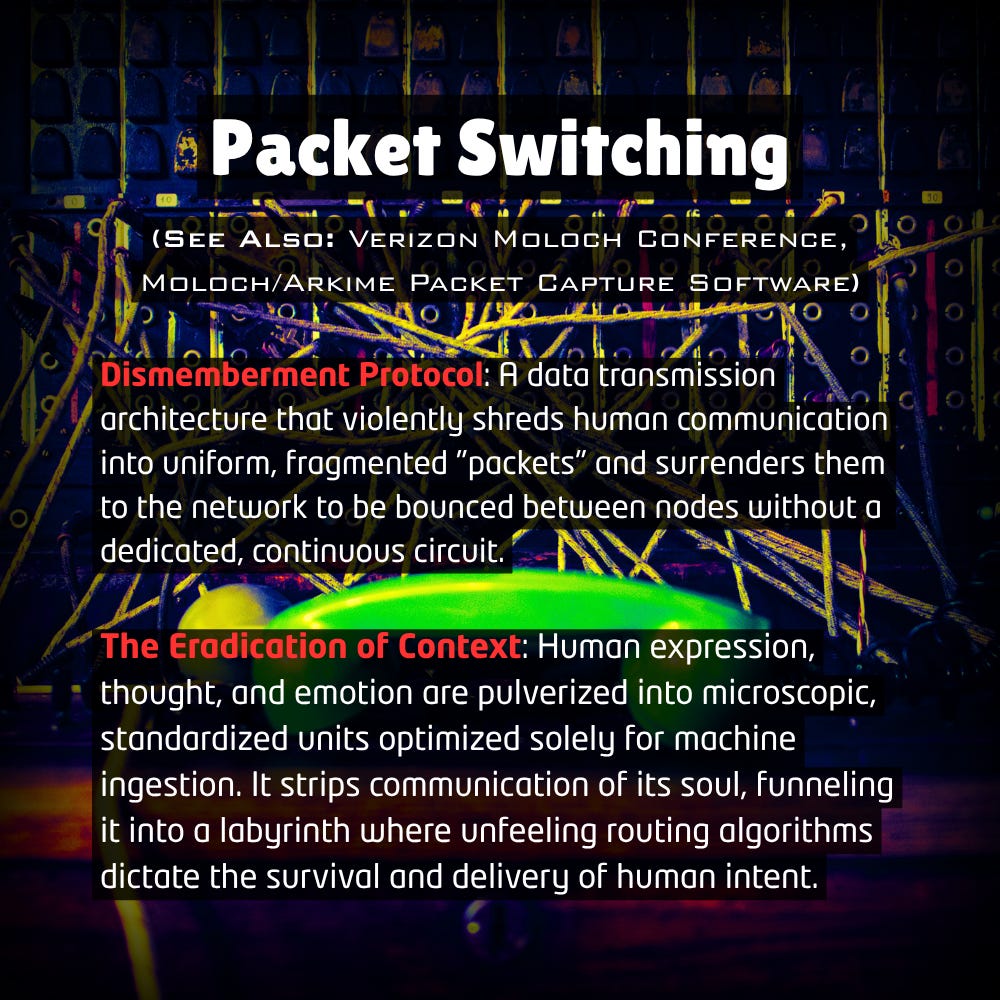
Packet Structure (The Communications Panopticon): Similarly, digital communication is violently dismembered into standard “packets” consisting of link, internet, transport, and application layers. This mandatory fragmentation ensures that every human thought, voice, or file is converted into a standardized format easily digested by “Internet Daemons”—the autonomous programs embedded in the global routing infrastructure. Just as ISO-20022 feeds financial surveillance, the standardized packet feeds Deep Packet Inspection (DPI). Because the packet is structurally uniform, military-grade daemons like the NSA’s Narus STA 6400 (installed in AT&T splitter rooms) can tear open the packet, inspect the application layer, and profile, throttle, or nullify the user in real-time without human intervention.
The TCP/IP Coup: Brute-Forcing the Standard
The history of how TCP/IP became the global standard exposes how “shady standards” bypass democratic or even international consensus. Throughout the late 1970s and 1980s, the ISO was painstakingly developing the OSI (Open Systems Interconnection) reference model as the international standard for networks.
The U.S. Department of Defense and DARPA, however, had zero interest in waiting for an international consensus. They deployed a brutal strategy to bypass the ISO entirely: they threw military black-budget money at the problem. DARPA funded the integration of their TCP/IP protocol directly into the UNIX operating system via UC Berkeley and BBN. By weaponizing their funding to saturate the academic and commercial markets with subsidized TCP/IP implementations, they created an unstoppable de facto standard. TCP/IP won the “standards war” not because it was technically superior, but because the military-industrial complex flooded the market with running code, forcing the world to adopt their specific architecture of control or be left completely disconnected.
The End Game: Code as Law
Both packet structures and unified financial ledgers (ISO-20022) are building toward the ultimate prison: “Code as Law”. By burying their authority inside the technical standards of infrastructure, the elite ensure that resistance is impossible. You cannot negotiate with a routing daemon dropping your packets, just as you cannot argue with a smart contract that algorithmically freezes your CBDC wallet. The standard becomes the invisible dictator, and the human being is reduced to a trackable, manageable asset conforming perfectly to the machine’s parameters.
Timestamps
00:00:00 Stream Begins
00:05:25 Semiconductor Manufacturing is Indistinguishable from Magic
00:10:45 The Electronic Response Curve: How Transistors Actually Work
00:16:30 Fab Anatomy: Inside Samsung's Spanking New Austin Facility
00:23:20 Maxwell's Demon: The 1871 Paradox That Baffles Physics
00:27:35 The Szilard Engine: Converting Pure Information Into Useful Energy
00:31:05 Internet Daemons: Possession of the Media Infrastructure
00:37:30 Man-Computer Symbiosis vs. Batch Processing Bottlenecks
00:41:55 Donald Davies, Packet Switching & Nuclear Survivability Protocols
00:46:15 The Interface Message Processor (IMP) & The First Minions
00:49:10 Leaky Buckets, Token Buckets & Hot Potato Routing Systems
00:54:10 Oliver Selfridge's Pandemonium: A Screaming Chorus of Code
00:59:50 Polychronous Optimization: The Commodified Anxiety of Lag
01:04:15 Tactical Vacuoles of Noncommunication: iPredator vs. Deep Packet Inspection
01:08:40 Pervasive 6G AI & The Living Crystals of Atlantis Hypothesis


